

























































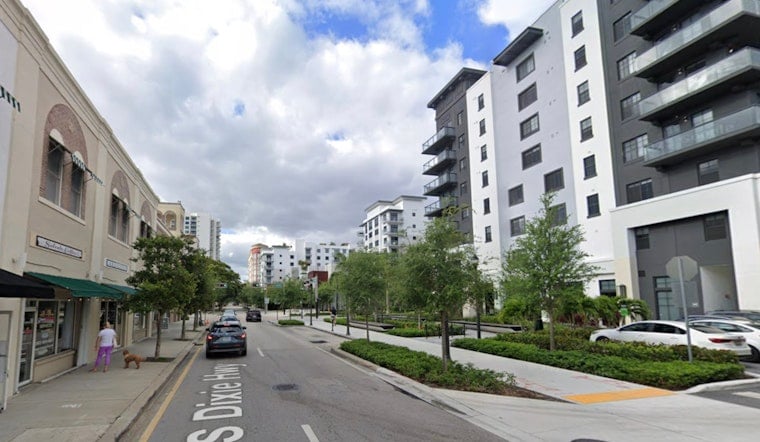
Billionaire developer Jeff Greene is lining up a new skyline play in downtown West Palm Beach, proposing a 25-story apartment tower at 120 S. Dixie Highway under Florida’s Live Local Act. If the building goes forward with the mass-timber framing described so far, it would become the tallest mass-timber structure in Florida.
First detailed by the South Florida Business Journal, Greene’s concept calls for a 25-story Live Local Act project on the downtown parcel. The outlet reports that the plan leans on Live Local incentives to boost height and density and would rely on mass-timber construction rather than a conventional concrete structure.
County records peg the property tied to 120 S. Dixie Highway at roughly 1.26 acres, a footprint that can comfortably fit a mid-to-high-rise project, according to the Palm Beach County Property Appraiser. Greene is already one of West Palm’s biggest landholders and has several other projects in play, including the long-running One West Palm development, as The Real Deal has reported.
How the Live Local Act shapes the proposal
The Live Local Act gives qualifying projects a way around some local zoning limits, along with a path to administrative approval, in exchange for locking in long-term workforce housing. According to Florida Housing, developments that qualify generally must reserve about 40 percent of units for households earning at or below 120 percent of the area median income and keep those homes affordable for decades.
That bargain, trading extra height, density and tax breaks for workforce units, is increasingly reshaping redevelopment across South Florida, especially after 2026 amendments to the law. Urbanize Miami breaks down the latest tweaks and how they could play out on the ground.
Mass timber: benefits and questions
Mass timber has a growing fan base for its quick assembly and lower embodied carbon, yet tall-wood towers still raise plenty of engineering, fire-safety and insurance questions, especially in hurricane-prone regions like South Florida. The 25-story Ascent tower in Milwaukee is often held up as a proof-of-concept for high-rise mass timber, showing what is technically possible while also underlining how approval processes and insurance standards can shift from one market to another. The Daily Reporter chronicled Ascent’s construction and its technical milestones.
What comes next for Greene’s proposal
Because Live Local projects can qualify for administrative sign-off if they meet the statutory checklist, the timing for Greene’s tower will largely depend on whether his team files a fully compliant application and lines up financing. West Palm Beach already has some Live Local experience under its belt, including the Deco Northwood project that cleared early city hurdles last year. City staff will determine whether Greene’s proposal can move through the administrative track or whether it triggers additional community review or negotiated conditions, a process that Palm Beach Now has followed closely in other local filings.
Legal and community questions
The Live Local Act has already sparked lawsuits and heated public showdowns elsewhere in South Florida, a pattern that could easily follow any high-profile proposal in West Palm Beach. Recent dustups, from courtroom decisions to state-level interventions, show how Live Local projects frequently become proxies in bigger fights over local control, housing policy and neighborhood character. Coverage of the Bal Harbour brawl and similar conflicts illustrates how intense those battles can get.
For now, Greene’s mass-timber tower remains in the pre-filing stage, waiting on formal paperwork and whatever scrutiny West Palm Beach staff and elected officials decide to apply. If it advances, the project will test how far the Live Local law can reach in Palm Beach County and how a tall mass-timber building performs within Florida’s particular climate, codes and regulatory politics.





