

























































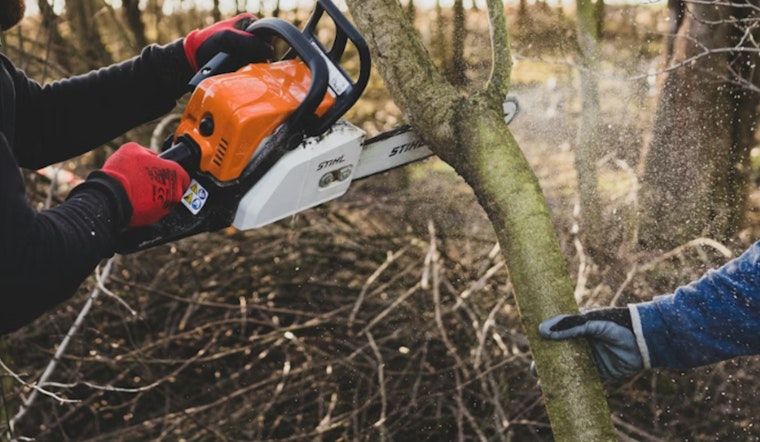
A federal judge has abruptly ordered chainsaws to go quiet in the Blue and Gold timber project west of Yoncalla, issuing an immediate halt to logging on federal land after finding that the Bureau of Land Management undercut its own promises about which trees could be cut. The stop‑work order pauses active operations on federally managed ground while the agency’s approvals get picked apart in court.
U.S. District Judge Mustafa T. Kasubhai went further than a temporary pause. He vacated the Blue and Gold environmental assessment, its Finding of No Significant Impact and the Decision Record, and told the BLM to start over. The court said the plan area covers roughly 3,594 acres and that BLM's selected alternative would have allowed 2,405 acres of harvest, including 738 acres of variable‑retention harvest and 1,667 acres of commercial thinning, according to the U.S. District Court opinion.
Kasubhai wrote that “significant evidence” in the administrative record shows protected old‑growth trees scattered across the project area and that the bureau’s own merchantable tree plot summaries list many trees above the diameter limits in its resource plan. Those findings, he said, undercut BLM’s explanations and its legally required protections. The opinion returns to that theme in detailing how the agency mischaracterized stand age and structure, and it vacates the decisions on that basis.
The ruling did not come out of nowhere. A 2024 investigation by ProPublica and Oregon Public Broadcasting had already flagged massive, centuries‑old trees inside the Blue and Gold boundary and raised questions about the bureau's underlying age data, as reported by ProPublica. After that, volunteers and a retired BLM surveyor documented recent cutting and measured stumps and living trees, including an 86‑inch diameter Douglas fir and a stump with an estimated 221 rings, evidence plaintiffs say directly contradicted BLM’s field data, according to Lookout Eugene‑Springfield.
Plaintiffs Cascadia Wildlands, Oregon Wild and Umpqua Watersheds say the order vindicates years of fieldwork and legal challenges. Oregon Wild called the ruling “a relief” for ancient forest habitat. On the other side, industry and county groups argue the pause disrupts planned harvests that support local mills and public revenues, and timber interests described the decision as “disappointing,” per OPB.
Legal Fallout
By wiping out the EA, FONSI and Decision Record, the court forced BLM back to the drawing board under both the Federal Land Policy and Management Act and the National Environmental Policy Act, effectively requiring a fresh look at how the agency measures stand age and protects legacy trees. Local reporting and court filings say the judge found that BLM relied on flawed stand‑age data and failed to take the statutorily required “hard look” at environmental impacts, leaving the bureau the option to prepare a full Environmental Impact Statement if it wants the project to move forward, according to Register‑Guard (via AOL).
What Happens Next
From here, BLM can seek rehearing or appeal the decision, or it can reopen its analysis and prepare a more detailed EIS. Either choice is expected to take months and will likely invite more legal challenges, agency statements and public scrutiny. The ruling lands just as BLM works on a broader revision of its western Oregon resource plans that industry groups favor, a fight likely to heat up this summer, plaintiff groups warned in Oregon Wild.
For now, the chainsaws in the Blue and Gold units are quiet while the legal process plays out. Conservation advocates and timber communities alike will be watching to see whether BLM rewrites its rules in a way that actually shields old‑growth stands. Observers say the case could set the tone for how the agency balances timber production and ancient‑forest protections across western Oregon in the years ahead, as logging plans are revisited and public scrutiny intensifies, per Lookout Eugene‑Springfield.




