

























































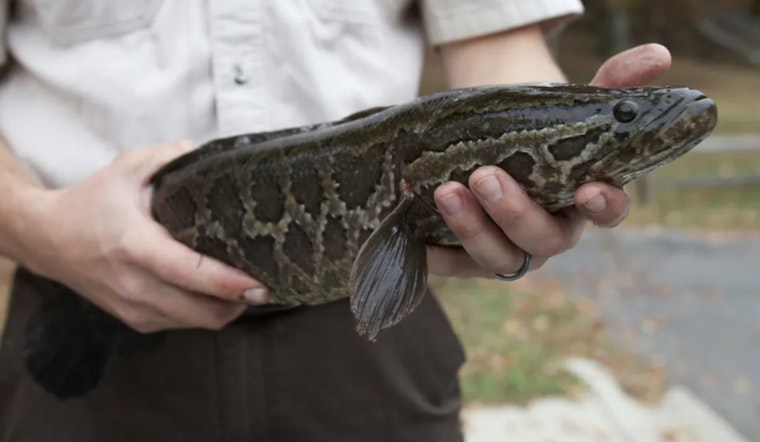
A notorious invasive predator has turned up in one of Long Island's best known lakes, and state crews are racing to find out whether it is alone.
The New York State Department of Environmental Conservation (DEC) confirmed that a northern snakehead, a large predatory fish not native to New York, was found in Lily Pond at Lake Ronkonkoma in Suffolk County. State environmental crews have expanded their investigation of the small pond and are searching for any additional snakeheads, since the discovery has raised alarms about potential damage to aquatic life and local recreational fishing.
DEC crews mobilize at Lily Pond
According to News12 New York, DEC crews were scheduled to head out Wednesday morning to survey Lily Pond and use electrofishing to look for more snakeheads. Electrofishing is a non lethal technique that briefly stuns fish so they can be netted and identified. Officials said the survey is meant to reveal whether this was a lone fish or the start of a breeding population.
DEC told News12 that stopping the spread of the invasive predator is crucial to protecting Long Island's waters, wildlife and fishing industry, so crews are treating Lily Pond as an early test of how far the species may have spread.
Why biologists are worried
The U.S. Geological Survey notes that northern snakeheads are air breathing freshwater fish that can survive periods out of water and move between nearby ponds. Coverage in the Smithsonian and scientific studies report that their mix of amphibious ability, broad diet and high reproductive rates can reduce native fish populations and alter food webs.
That combination makes early detection and rapid action especially important in small, isolated waters like Lily Pond, where one invasive species can quickly dominate.
How snakeheads reach local waters
According to the New York State Department of Environmental Conservation, northern snakeheads most likely arrive in local waters through aquarium dumpings and accidental or intentional releases from live food fish markets. The agency also warns that anglers and boaters can inadvertently move juvenile snakeheads between waterbodies in livewells or on gear.
Preventing the spread, DEC says, depends heavily on public reporting and careful cleaning of boats and equipment. The agency notes that snakeheads prefer shallow, vegetated ponds and swamps, which makes Lily Pond exactly the kind of spot they tend to favor.
Lake Ronkonkoma's stakes
Lake Ronkonkoma is the largest freshwater lake on Long Island and has long served as a recreational hub, according to Suffolk County. County and town officials have been working with state agencies on water quality and habitat improvement projects there, and managers warn that invasive predators could complicate those restoration efforts and harm the local fishery.
The watershed plan underscores the lake's importance to surrounding communities and nearby economies, and stresses that coordinated management across jurisdictions is needed to keep it healthy.
What anglers and residents should do
DEC guidance advises that anyone who thinks they have caught a snakehead should not release it, should take clear photos from different angles and then report the sighting to the agency using the contact options listed on its website. The guidance states that any snakehead caught while angling must be killed and reported to DEC.
The agency points people to tools such as email and the iMapInvasives reporting system for submissions. Residents who suspect sightings are also urged to avoid moving water or bait between lakes and to clean gear and boats to reduce the chance of accidentally spreading invasive species.
What happens next
DEC officials said crews will expand sampling in the coming days and will share results when the surveys are complete. Those findings will determine whether managers need to widen control efforts beyond Lily Pond.
News12 New York reported that the agency is emphasizing early detection as the key to preventing the establishment of snakeheads and protecting local fisheries. This story will be updated as officials release new information.




