

























































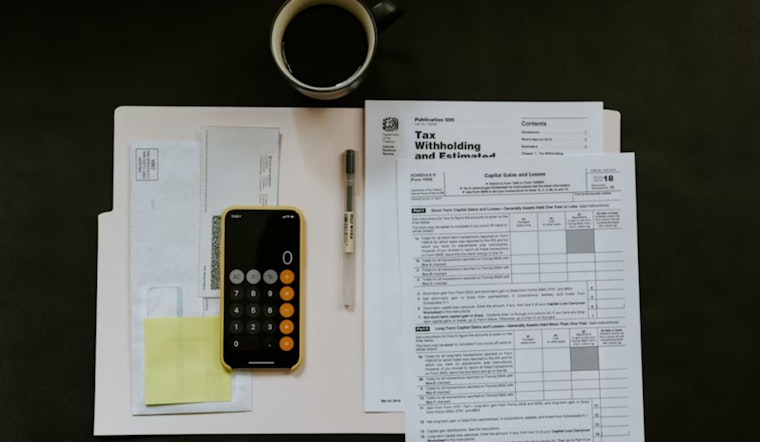
Clark County homeowners are learning a frustrating lesson this year: property tax bills can jump even when no one is shouting about a major rate hike. With assessed values climbing and statewide levies layered on top, many Valley households are opening envelopes that are noticeably heavier than last year.
How Clark Stacks Up By Rate And Revenue
For fiscal year 2025–26, the countywide combined tax rate in Clark County was 3.1453 per $100 of assessed value. That rate is actually below the top combined rates in several smaller counties. According to the Nevada Department of Taxation, Washoe, Mineral and White Pine all carried higher combined rates on the FY 2025–26 roll.
Clark still produces the largest property tax haul in Nevada. The same state figures show Clark’s taxable base generating roughly $4.8 billion in projected property tax revenue. That combination of a relatively modest per $100 rate and an enormous assessed-value base is why bills coming out of Clark can feel big even when the local millage does not top statewide lists.
Why Your Bill Can Rise Even If The Rate Doesn’t
Nevada law requires that assessed value be set at 35% of a property’s taxable, or full-cash, value. So when home prices climb, the assessed value used to compute taxes rises too, even if the per $100 rate barely moves.
Under the Nevada Revised Statutes, that 35% assessment ratio and the state’s partial-abatement rules generally cap annual bill growth at about 3% for owner-occupied single-family homes and allow higher caps for other property types. Those rules dictate how much a homeowner’s tax payment can change from one year to the next. Put together, they help explain why many Clark homeowners saw higher dollar bills this cycle even with only small or negative tweaks to local millage.
Numbers And A Simple Example
Local coverage leaned on an OpenTheBooks analysis when the new numbers landed, and Rachel O’Brien joined KSNV to walk through how the average bill rose.
Using Clark’s FY 2025–26 combined rate of 3.1453 per $100 together with Nevada’s 35% assessment rule, a home with a $100,000 full-cash value would carry roughly $1,100 in property tax under this roll. That figure comes from multiplying the assessed value, 35% of $100,000, by the combined rate, as outlined by the Nevada Department of Taxation. Even small percentage moves in market value can therefore turn into hundreds of dollars at the kitchen table.
What To Do If Your Bill Jumped
If your bill looks off, start with the basics. Check your Notice of Assessed Valuation for the coming fiscal year and confirm the full-cash, limited-property and assessed values listed there, and do it before the appeal window closes.
The Nevada Revised Statutes set the timing and procedures for protests. County assessors must mail valuation notices in time for property owners to file challenges, and an owner generally must file an appeal with the county board of equalization by January 15.
If you suspect an error or overvaluation, contact the Clark County Assessor’s Office, pull together recent comparable sales or a private appraisal, and consider submitting a formal appeal before the statutory deadline.
Numbers like these are worth watching as lawmakers and local districts build budgets for police, schools and public works. For now, the immediate move for worried homeowners is simple: read the valuation notice carefully, document any problems you spot and use the appeal process that state law already puts on the table.



