

























































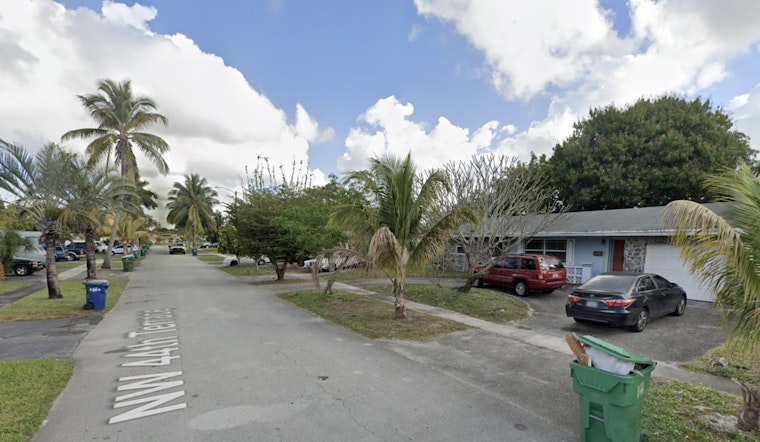
A Lauderhill house on the 2000 block of Northwest 44th Terrace is back in the spotlight after a TV investigation raised fresh questions about whether it is housing more unrelated residents than city rules allow. The property, which was linked to a stabbing last October, already has a history of overcrowding violations and tenant complaints. City code staff say they will re‑inspect the home in the coming weeks to determine whether the owner has brought the property back into compliance.
According to CBS News Miami, the owner reduced the number of residents to four in January after an October inspection found seven people living at the house. When reporters checked back last week, tenants said five or six people are now sharing the property. Tenants told CBS some pay as little as $750 a month and one resident said he pays $1,000 for his room. The owner declined to answer questions when approached at a business address on Fort Lauderdale Beach.
According to the City of Lauderhill's rental application, property owners must obtain a Certificate of Use and schedule minimum‑housing inspections before operating a rental. The form explicitly asks how many non‑related adults occupy a unit and warns that rooming houses are not permitted, which means a single‑family rental that hosts five or more unrelated people would be outside the approved use.
What the code says
Lauderhill's Land Development Regulations, as codified on Municode, define a family to include unrelated people but note, "For controlling of residential density, each such group of four (4) individuals shall constitute a family," which effectively caps unrelated occupants at four in a single‑family dwelling. That definition is the legal basis for the city's conclusion that five or more unrelated tenants would violate the home's Certificate of Use.
Tenants and neighbors describe conditions
Residents who spoke with reporters described crowded rooms and said police once kept them waiting outside while they investigated the stabbing last fall. In interviews with CBS News Miami, a tenant said, "You can't afford your own place; you take what the system will give you," a blunt summary of how tight budgets and low rents can funnel people into shared houses.
How enforcement works
If inspectors find a code violation, the city can issue notices, refer cases to a special magistrate or the Code Enforcement Board, and pursue fines or revocation of a Certificate of Use, city materials show. Lauderhill regularly posts Code Enforcement Board hearing notices and agendas where unresolved violations are scheduled for public hearings and possible penalties.
Why cities are acting
Local planners and advocates say the growth of shared‑living operations, from independent group homes to unregulated recovery residences, has strained neighborhoods and pushed municipalities to tighten rules. A 2024 report by planning attorney Daniel Lauber on zoning for community residences notes the heavy concentration of recovery residences in parts of Broward and Palm Beach counties and highlights the difficulty cities face balancing safety, oversight and fair‑housing law (Lauber report).
Neighbors say they want the city to enforce existing rules, and city officials say they will inspect the property and make a determination after that visit. For now, the case is back on the city's enforcement radar as officials and residents wait to see whether the owner follows the certificate terms or faces further action.





