

























































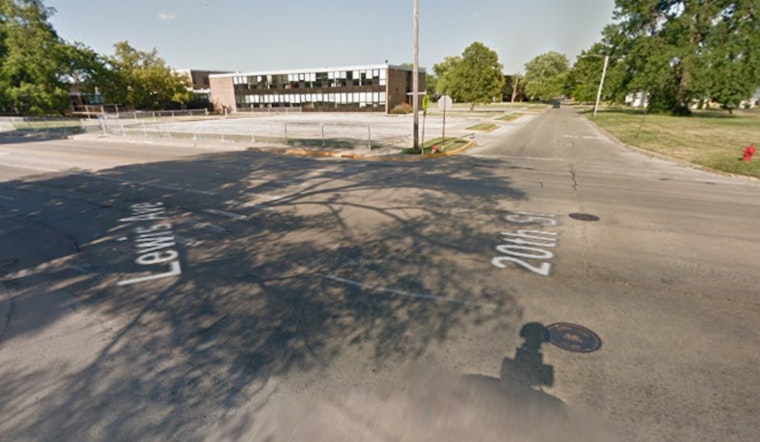
North Chicago has finally brought in the heavy machinery. On May 1, the city broke ground on a new stormwater detention basin near Lewis Avenue and 20th Street, a project officials say is built to put an end to the recurring street and basement flooding that has soaked the city’s southwest neighborhoods. The basin is designed to trap stormwater during heavy rains and then moonlight as a passive park and outdoor classroom for the students who live and study nearby.
According to the City of North Chicago, Phase 1 will create a roughly 20.5-acre-foot detention basin, which the city compares to more than 20 football fields covered with a foot of water. The work is funded in part by a $1.7 million grant from the Illinois Department of Commerce and Economic Opportunity. City officials say the multi-phase effort is intended to relieve peak flows into undersized storm sewers and protect about 742 residences and more than 900 structures. The city marked the project with a May 1 groundbreaking and has late August circled as the target completion date for this first phase, with Berger Contractors leading the initial work.
Site and engineering
Project documents and bidding notices show the basin will sit on a vacant parcel just south of the Neal Math & Science Academy, at the southwest corner of Lewis Avenue and 20th Street. Construction will involve excavation, new sewer connections and landscaping. As outlined by Trotter & Associates, the Phase II procurement names Steve Cieslica as project manager and requires bidders to meet a 30% BEP utilization goal. Engineering drawings prepared by V3 Companies show grading plans, the basin footprint and the supporting storm infrastructure that will move water in and out of the site.
Officials and engineers on what it will do
Officials and engineers told reporters the basin will be roughly 10 feet deep and that the pond should drain within about 24 hours after a storm, a timing that is meant to limit standing water and reduce sewer backups, as reported by the Chicago Tribune. The project is being pitched not just as flood control but as a new slice of public space, with walking paths, flower and pollinator plantings and an outdoor classroom. Mayor Leon Rockingham Jr. said the investments should protect households so “residents will no longer have to lift furniture off the ground to protect their possessions,” the Tribune reported.
That same coverage places the Lewis Avenue basin inside a broader $55.7 million package of city infrastructure work. The slate includes a roughly $22.3 million federal grant to rebuild Argonne Drive, with about a $1 million city contribution, along with a planned new water tower that is intended to stabilize the system and remain compatible with Naval Station Great Lakes.
Where it fits regionally
The Lewis Avenue basin appears on Lake County’s list of ongoing stormwater projects, grouped with other watershed and detention improvements across the north shore. The FY2026 budget, posted by the City of North Chicago, also includes line items for Lewis Avenue detention design and phased Argonne Drive reconstruction, underscoring that the basin is one piece of a larger capital push focused on stormwater and roadway repairs.
What residents should expect
Phase 1 will bring heavy equipment onto the site along with localized lane and sidewalk closures. Once the digging and pipe work wrap up, crews are slated to restore the area with topsoil and new plantings. Bidders were required to include performance and payment bonds and DCEO-compliant BEP plans, per the procurement notice from Trotter & Associates, and contractors will be subject to prevailing-wage rules and other state contracting requirements. Neighbors are being told to expect a short summer construction window and the city has encouraged residents to keep an eye on council agendas for project updates.
The basin will be a very public test of North Chicago’s effort to tackle aging storm infrastructure in a tight summer schedule, and city leaders say the park-style features are meant to deliver some green space along with sorely needed flood protection. If the project performs as advertised, officials say the basin should cut both the frequency and severity of floods that have long troubled the surrounding neighborhood.




