

























































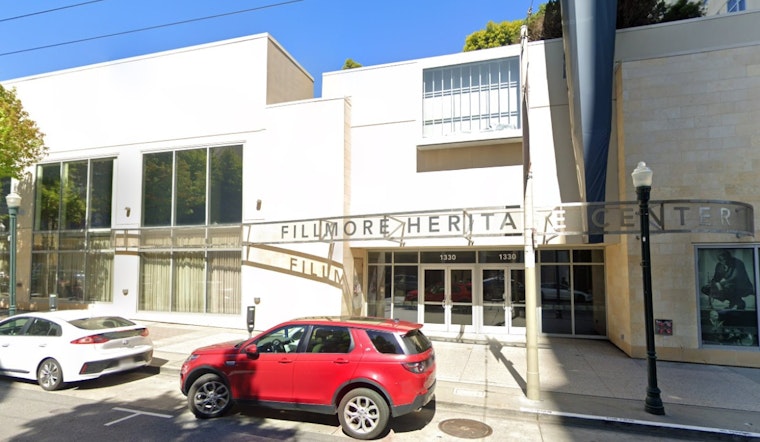
The long-shuttered Fillmore Heritage Center is set to flicker back to life, at least for a while. City officials say the complex will reopen temporarily through December for a series of short-term activations aimed at reviving the corridor. The move throws open one of the Western Addition’s most visible vacant properties to neighborhood groups, artists and small businesses while the city figures out what the space should become in the long run. For residents who have watched the block sit empty, the pilot is a small but tangible step toward restoring activity along Fillmore and Eddy streets.
According to the San Francisco Chronicle, the Office of Economic and Workforce Development will begin rolling out temporary programming next month and expects to open applications for groups and creators at the end of June. The city says use of the 50,000-square-foot complex will be free for community groups during the pilot. Private events will not be allowed, and the city will not provide funding for programs hosted in the building. Officials say the short-term activations will run through December while staff complete a facilities assessment and a broader market study that will help determine the center’s long-term future.
What’s inside the center
The Fillmore Heritage Center’s commercial parcel totals roughly 50,000 square feet and includes the former Yoshi’s jazz club, a restaurant and lounge, and gallery space, according to OCII. Yoshi’s, the center’s anchor tenant, closed after bankruptcy in 2014, and the club space has largely remained dark since, KQED reported.
Community groups ready to step in
Local organizers greeted the announcement with cautious optimism and a clear sense of purpose. “These temporary activations are about bringing life back into this space through arts, music, entrepreneurship and public engagement while creating pathways for the next generation of Black artists and leaders,” Majeid Crawford, executive director of the New Community Leadership Foundation, said. Supervisor Bilal Mahmood, whose district includes the Fillmore, called the city-led activation a “key first step” in reversing the long history of disinvestment on Fillmore Street, the San Francisco Chronicle reported.
What comes next
City staff says the pilot will help test uses and collect data to inform a permanent plan, while the site’s ownership and financing history continue to complicate long-term solutions. The long-range plan notes the commercial parcel is tied to federal and city loans and that disposition options include transfer or sale, according to OCII. Local officials and neighborhood groups say the facilities assessment and market study should prioritize community-serving uses and pathways for Black artists and entrepreneurs, a goal echoed by Supervisor Dean Preston in recent statements. For now, organizers and small-business owners will be watching for application details expected at the end of June as OEWD begins rolling out the first activations next month.





