

























































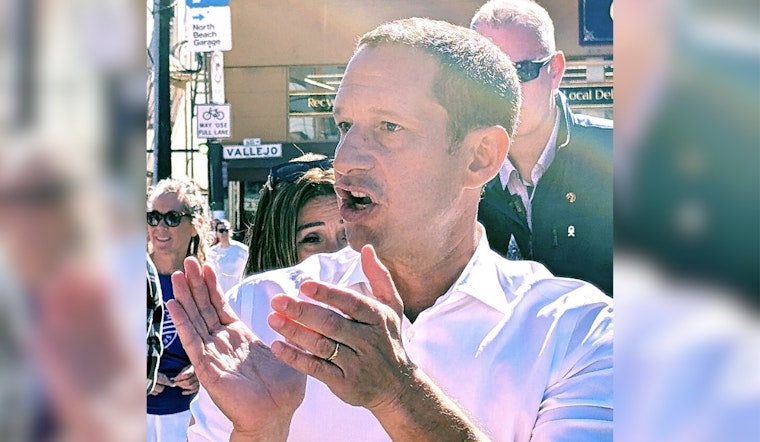
Faced with tougher federal work rules that could knock thousands of low-income residents off public benefits, Mayor Daniel Lurie is cracking open one of San Francisco's biggest rainy-day piggy banks.
Lurie announced the city will pull $34 million from an emergency federal reserve to help San Franciscans hang on to Medi‑Cal and CalFresh as new federal work requirements kick in. The cash will pay for extra eligibility workers, a mobile enrollment truck and stepped-up outreach to connect people with work or volunteer options they need to report in order to keep coverage. City officials say the move is designed to ward off a wave of uncompensated hospital bills that could easily run into the hundreds of millions of dollars.
As reported by The San Francisco Standard, Lurie plans to tap $34 million from the city's Federal and State Revenue Risk Reserve specifically to stabilize Medi‑Cal and CalFresh enrollment. Trent Rhorer, executive director of the Human Services Agency, told the outlet that HSA will hire more than 150 additional staffers to confirm eligibility and process paperwork, on top of roughly 760 employees already working across the agency. "Even though we have zero funding from the feds to do this, and zero funding from the state to do this, we are taking it as our responsibility as a city to help [people] meet those work requirements," Rhorer said.
Where The Money Is Coming From
The cash is sitting in a reserve the mayor and Board of Supervisors created to cushion the city from sudden federal and state revenue hits. According to the city's joint budget report, the Federal and State Revenue Risk Reserve was expected to hold about $487.3 million. That pot includes revenue escheated from city medical reimbursement accounts along with other one-time sources, and the report emphasizes it is a bridge, not a permanent funding stream. Choosing to crack into it now is a policy call that has to be weighed against every other budget headache at City Hall.
What The New Federal Rules Do
The looming changes grow out of H.R. 1 and its expansion of work requirements for safety-net programs. CalFresh time limits are scheduled to begin June 1, 2026, and Medi‑Cal is slated to adopt a roughly 80-hour-per-month participation rule when that provision takes effect in January 2027, according to testimony compiled by CalMatters. County officials and eligibility workers have warned those rules will load on serious administrative hassles and could trigger widespread disenrollment if agencies are not beefed up with extra staffing and better automation.
How City Hall Plans To Soften The Blow
The San Francisco Standard reports that city analysts estimate up to 45,000 San Franciscans could lose coverage under the new rules and that the fallout could stick San Francisco with as much as $400 million in uncompensated medical costs. To try to avoid that bill, the Department of Public Health is redirecting funds into the Healthy San Francisco program, and the Human Services Agency has already rolled out a mobile enrollment truck and a website that helps residents find qualifying work or volunteer opportunities.
Bottom Line
The city's joint budget report also underscores that this reserve is finite and the broader budget squeeze is still very real. The latest projections show multi hundred million dollar deficits in the coming years and treat the Revenue Risk Reserve as a one-time tool, not a habit. City officials say the $34 million withdrawal is meant to buy some breathing room while counties, the state and advocacy groups push for longer-term fixes so residents are not trapped in a cycle of losing coverage and scrambling to get it back.





