

























































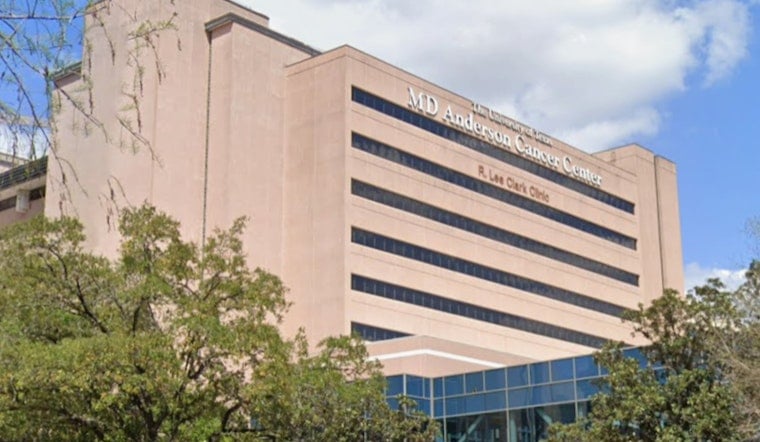
MD Anderson’s $2.9 Billion Cancer Tower Set To Shake Up Houston Med Center
The University of Texas MD Anderson Cancer Center just got the green light for one of the biggest projects in the Texas Medical Center, a patient care expansion now valued at just over $2.9 billion. Regents signed off earlier this week on the final stages of Patient Care Building 1, approving a 25-floor clinical tower and a standalone Therapeutic Radiation Center that will boost both inpatient capacity and outpatient clinics. The new tower is designed to help untangle patient flow across MD Anderson’s main campus, where getting from one appointment to the next can feel like running a maze on a tight schedule.
Funding And The Regents' Vote
According to The University of Texas System, the Board of Regents amended its capital improvement program this week to boost the project budget and add the final phases to the system capital plan, moving the total estimate to roughly $3.0 billion. Board materials show MD Anderson plans to put in about $1.64 billion from hospital revenues, while the system would issue roughly $1.2 billion in Revenue Financing System bonds to cover the rest.
Project Scope And Design
MD Anderson’s own planning materials describe Patient Care Building 1 as roughly 1.74 million to 1.8 million square feet, with 25 floors above ground and two basement levels. The space is laid out for disease-specific clinics, infusion therapy, expanded inpatient units, and diagnostic and treatment suites. As outlined by UT MD Anderson, the design leans heavily into patient experience, with planned skybridges, terraces, and integrated wayfinding so patients and families spend less time wandering hallways and more time actually getting care.
Timeline And Next Approvals
Per the U.T. System agenda book, later construction stages are expected to get notices to proceed in early 2027. The earliest substantial completion milestones are targeted for 2029, with final stages stretching into 2031. Regents noted that specific spending approvals and contract awards will come back to the board in future meetings as the project moves from design work into active construction.
What This Means For Houston
Local coverage has zeroed in on the scope of the build and what it will mean for the Texas Medical Center over the next several years. KHOU notes that reporting based on the Houston Business Journal highlights a multiyear construction program that will reshape traffic patterns and campus circulation. For neighbors, workers, and patients, that likely translates to long-term lane closures, detours, and a skyline slowly filling with cranes, while MD Anderson and the U.T. System say they will coordinate with the community as work progresses.
Next Steps For Patients And Neighbors
Hospital leaders have framed the project as a way to future-proof care, with flexible space for advancing treatment technologies and layouts intended to cut down on patients having to shuttle between multiple clinics for a single course of treatment. The building is tied to MD Anderson’s broader fundraising campaign and remains a named priority in its public push to support expansion and patient services, according to MD Anderson. As the project moves ahead, MD Anderson and the U.T. System will continue bringing spending items and major contracts back to the Regents, while patients and neighbors watch one of Houston’s most visible medical campuses grow even larger.





