

























































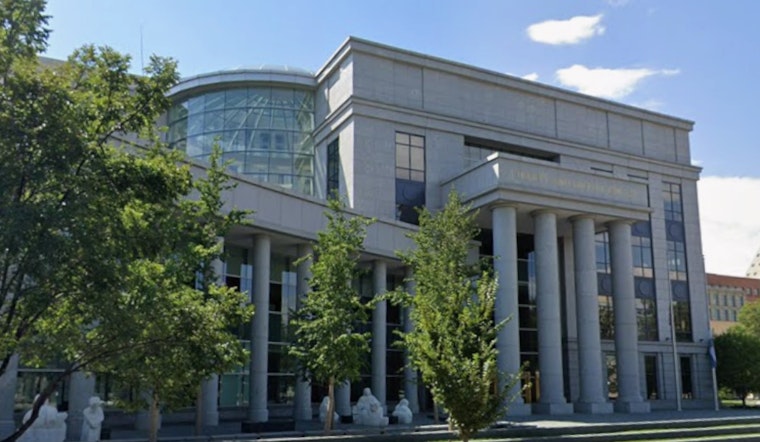
A low-profile Mesa County divorce has suddenly become a statewide test case on a question that has nagged Colorado family lawyers for decades: when does spousal maintenance end if the person receiving it remarries? The Colorado Supreme Court has agreed to step in after a separation agreement that called for $1,500 a month, totaling $108,000 over six years, ran headfirst into a new marriage in June 2023 and a paying spouse who stopped cutting checks. The decision could reshape how divorce paperwork is written across Colorado.
Supreme Court Grants Review
On May 18, the Colorado Supreme Court granted a petition for a writ of certiorari in the case In the Marriage of Clark and said it will decide whether a separation agreement must expressly mention “remarriage” to get around the statute that otherwise ends maintenance. According to the Colorado Judicial Branch, the petition is listed as No. 25SC634 and will be heard en banc. The move follows a Colorado Court of Appeals ruling that openly acknowledged conflicting precedent and all but asked the high court to step in.
Case Background and Appeals Ruling
The dispute stems from a 2022 separation agreement that the Clarks signed while representing themselves. They used a standard Judicial Department form and added a handwritten note declaring the “agreement is set and may not be modified or terminated.” As described in the Court of Appeals opinion published by Justia, the agreement required Christopher Clark to pay $1,500 per month beginning June 20, 2022. Jessica Clark remarried in June 2023, and Christopher Clark promptly stopped paying.
A magistrate, then a district judge, denied his motion to terminate maintenance, and an appellate panel ultimately affirmed. The appeals court concluded that, based on the language of this particular agreement, the obligation survived remarriage.
Appellate Split and a Judge's Plea
The Court of Appeals decision did more than resolve the Clarks’ fight. It walked through how different divisions of that court have applied different tests over time, starting with a 1971 ruling that required an “express statement,” followed by later panels that applied a looser approach, and then the 2021 Cerrone opinion that tightened the rule again.
In a special concurrence, Judge Grant T. Sullivan warned that “the divisions’ divergent interpretations will inevitably lead to inconsistent outcomes” and urged the Supreme Court to provide uniform guidance, according to the Court of Appeals opinion on Justia. The majority held that an agreement that “expressly or by clear implication” shows the parties’ intent is sufficient in this particular case, but left it to the state’s highest court to settle the larger doctrinal question.
What the Statute Says
Colorado law states that, “unless otherwise agreed in writing,” spousal maintenance ends when the person receiving it remarries, under C.R.S. 14-10-122(2)(a)(III). The statutory text is available on FindLaw. The Supreme Court now has to say whether “otherwise agreed in writing” demands specific magic words about remarriage or whether an agreement that clearly implies that intent is enough.
Family-law attorneys have already been watching closely. Practitioners previously told Colorado Politics that a ruling for either side would quickly change how separation agreements are drafted.
Why It Matters for Unrepresented Litigants
The stakes are particularly high for people who handle divorces without lawyers. Recent data from the Colorado Judicial Branch show a high pro se rate in domestic relations filings, with roughly three-quarters of parties appearing without counsel in recent fiscal-year reports. The appeals court pointed out that ambiguity in the law lands hardest on these self-represented litigants, who often rely on preprinted forms and may not know they need to spell out what happens if someone remarries.
That uncertainty can turn into drawn-out, expensive fights over what a line or two of boilerplate was supposed to mean. If the Supreme Court narrows or broadens what “otherwise agreed in writing” requires, attorneys expect quick revisions to standard separation forms and their familiar checkboxes.
What Happens Next
The case is officially docketed as In the Marriage of Clark. The Supreme Court has not yet set a briefing schedule or an argument date. Once the court posts its timetable, the parties will file briefs, and the justices will decide whether to impose a bright-line rule about the language that must appear in agreements.
Local coverage by the Denver Gazette notes that the high court’s intervention comes after years of uneven appellate rulings. For now, lawyers and do-it-yourself filers alike are waiting to see whether the Clarks’ case will finally deliver the clarity Colorado family law has lacked.





