

























































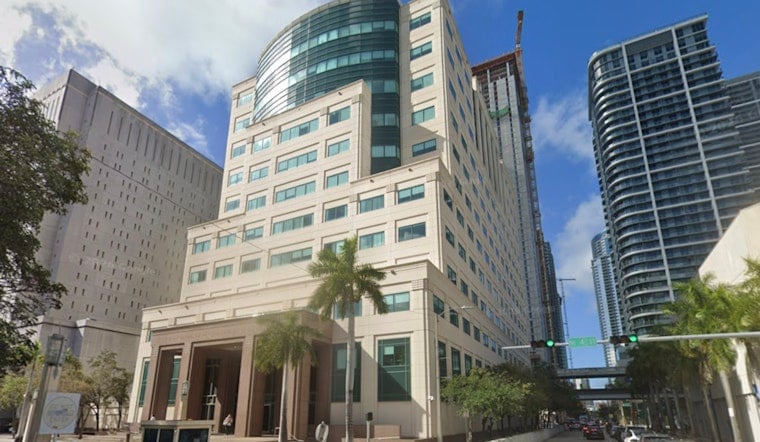
A federal courtroom in Miami closed the book on a massive bank-impersonation swindle on Monday, when U.S. District Judge Beth Bloom handed 41-year-old Ernesto Ortega Padgett a 15-year prison sentence for his role in a fraud that prosecutors say looted more than $29 million from victims across the United States. The case capped a cross‑border investigation that pulled in Spanish and French authorities along with multiple U.S. federal agencies.
U.S. Attorney Jason A. Reding Quiñones said Ortega "built a sophisticated international fraud scheme on deception, stolen trust, and technology," adding that the tough sentence is meant to send a message to transnational criminals, according to the U.S. Attorney's Office for the Southern District of Florida. Ortega pleaded guilty to conspiracy to commit wire fraud and conspiracy to transport stolen property before learning his fate from Judge Bloom.
How the scheme worked
Starting in 2020, investigators say Ortega and his crew pretended to be legitimate bank employees, leaning on a mix of high‑tech tools and old‑fashioned smooth talking to convince victims to hand over account credentials. Once they had access, they allegedly launched unauthorized wire transfers, funneled the money through shell accounts and cash withdrawals, and often converted the proceeds into cryptocurrency, according to the FDIC Office of Inspector General. Officials also say Ortega used threats and coercion to force some people in the laundering network to push through transfers.
Capture and extradition
Authorities say Ortega's run ended at Charles de Gaulle Airport in Paris in December 2023, when he was intercepted after violating release conditions in Spain. He was later extradited to the United States on June 13, 2024. The FDIC‑OIG and the U.S. Secret Service, working with international partners, spearheaded the investigation that ultimately brought him into a Miami courtroom, according to the U.S. Attorney's Office.
Legal fallout and next steps
The indictment in the case lists 27 counts, including fraud, extortion, and money‑laundering charges. Assistant U.S. Attorneys Robert Moore and Michael Brenner handled the prosecution, while Assistant U.S. Attorney Gabrielle Raemy Charest‑Turken is overseeing asset forfeiture, according to the FDIC‑OIG. Several co‑conspirators have already been sentenced, and courts now turn to the painstaking work of locating and seizing Ortega's assets tied to case number 23‑cr‑20049.
Why this matters
The Ortega prosecution underscores just how costly impersonation and business‑email‑compromise style schemes have become. The Federal Trade Commission reports that Americans lost more than $12.5 billion to fraud in 2024, with impostor scams among the worst offenders, according to the Federal Trade Commission. Industry observers and regulators say cases like this spotlight weak spots around rapid cash‑outs and the conversion of stolen funds into cryptocurrency, a concern highlighted by American Banker.
Local coverage has framed the sentence as a major win for prosecutors and a rare bright spot for international coordination in complex fraud cases, giving fresh momentum to efforts to trace and reclaim stolen money, according to the Tampa Free Press. Victims or businesses with information about related activity can look up court records under case number 23‑cr‑20049 in the Southern District of Florida.





