

























































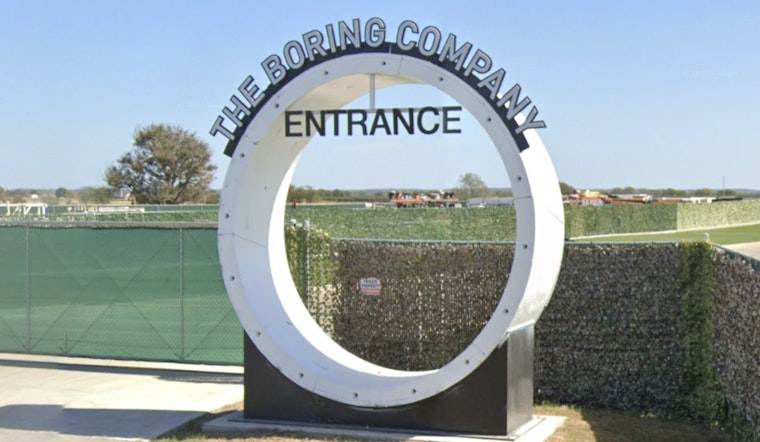
Mayor Helena Moreno is staking a big downtown bet on Elon Musk’s tunneling outfit, formally proposing that The Boring Company’s one-mile “NOLA Loop” run under one of New Orleans’ busiest corridors. Her preferred route would start near the Hyatt Regency and City Hall on Loyola Avenue, slide beneath Poydras Street, hook onto Convention Center Boulevard and finish at Julia Street, knitting together the hotels, convention center and riverfront into a tight little subterranean circuit. The idea is framed as a surgical fix for event traffic and hospitality crunch, and it is still very early in the process, with geotechnical testing, permits and plenty of community review required before anyone starts digging.
Moreno’s Feb. 20 application lays out a ridership estimate of roughly 75,000 to 125,000 riders per year and projects average time savings of about 20 minutes per trip, according to NOLA.com. The filing argues that travel between the convention center and the Hyatt Regency could drop to about three minutes during large events, which Moreno’s team pitches as a way to smooth out peak congestion in the hospitality corridor. The paperwork also notes that The Boring Company has pledged to pay for construction if its own diligence process concludes the project is feasible.
Who picked New Orleans and what they promised
The Boring Company launched the Tunnel Vision Challenge to collect one-mile tunnel concepts and spelled out the data and geotechnical details it would need to evaluate them, according to The Boring Company. The company said winning submissions would be reviewed and could receive company funding. Media coverage later showed that New Orleans was named one of three winners and that The Boring Company would finance a fully funded diligence phase before deciding whether to build. Reporting on the March announcement noted that the company would pay for geotechnical borings, subsurface utility investigations and meetings with local officials as part of that review, which is still short of any construction guarantee, Dallas News reported.
Why tunneling under New Orleans is complicated
While New Orleans debates its one-mile loop, The Boring Company is already pushing ahead with a much larger effort in Nashville, the Music City Loop, where tunneling activity has begun and offers a fresh look at how the company approaches approvals and construction. Coverage of that Nashville project has described it as costing in the low to mid hundreds of millions of dollars and has prompted residents and elected officials to raise questions about oversight and possible disruption. Engineers and local scholars caution that New Orleans brings a very different geotechnical profile, with a shallow water table and soft, recently deposited river sediments that make tunneling here trickier than in drier, rockier places. WSMV and Teslarati have covered the Nashville work, while local reporting closer to home has highlighted the geotechnical caution flag for New Orleans.
What comes next
If the company-funded geotechnical borings and subsurface utility investigations along the Loyola corridor show that a tunnel can be built safely and at a reasonable cost, The Boring Company says it will move ahead. If not, the process ends with a negative feasibility finding. Local officials say they are open to outside investment but are just as clear that any private proposal has to clear city permitting, public safety vetting and community input before construction can begin.
As outlined in information about the Tunnel Vision winners, the next step includes meetings with elected officials, regulators and neighborhood stakeholders while The Boring Company pays for the initial round of investigations, according to The Boring Company.
For now, Moreno’s filing sets the stage more than the dig site. It trains attention on Loyola and Convention Center Boulevard as the preferred alignment while engineers, neighborhood groups and business leaders gear up for technical studies and public meetings. Whether New Orleans ultimately embraces a privately funded subterranean shuttle will depend on what the drills find, how the permits shake out and how residents weigh the promised convenience against the very real engineering and environmental constraints under their feet.





