

























































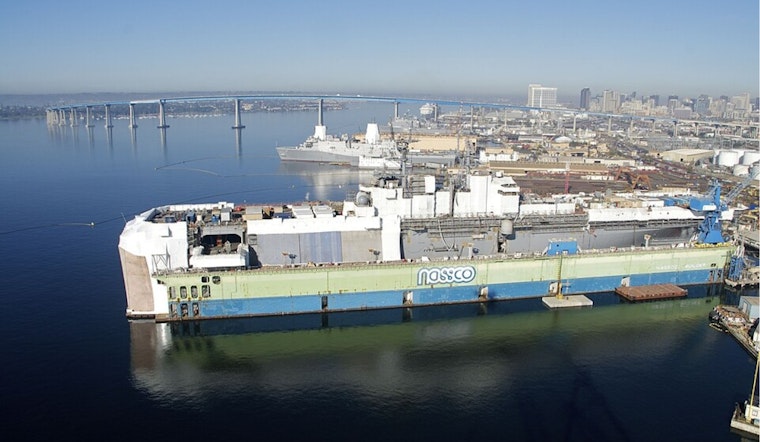
The Navy is pumping $856 million into San Diego's shipbuilding backbone, handing General Dynamics NASSCO the cash to build its next John Lewis-class fleet replenishment oiler, T-AO 217. Company leaders say the deal will keep the Barrio Logan yard humming and help preserve local jobs that hinge on a steady flow of Navy work.
The John Lewis-class oilers are essentially the gas stations of the fleet, built to refuel and resupply surface ships at sea so they can stretch their reach across the Pacific during long deployments. This latest award folds into a broader multi-ship production run that has become a mainstay for the yard and a critical pillar of its workload.
According to The San Diego Union-Tribune, the funding was announced last Wednesday and will pay for the construction of T-AO 217 at NASSCO's San Diego shipyard. The paper reports that the order helps stabilize a roughly 3,500-member workforce that relies on consistent Navy contracts, and notes that NASSCO is already building other oilers to be named for Ruth Bader Ginsburg and Harriet Tubman.
Company: Block Buy Keeps Production Rolling
In a press release from General Dynamics NASSCO, the company said the $856 million will fund T-AO 217 under an eight-ship block buy the Navy awarded in September 2024. NASSCO president Dave Carver put it bluntly in the release: "Funding for ship 13 (T-AO 217) maintains a steady workforce and helps mitigate the risk of future layoffs."
The same release notes that five additional T-AO vessels are already under construction at the San Diego yard. NASSCO is under contract to build 17 of the Navy's planned 20-ship program of record, giving the company a long runway of work as long as the funding keeps arriving on schedule.
Ship Specs And What They Do
The John Lewis-class oilers are sizable beasts by any standard. They measure roughly 742 feet, displace about 49,850 tons and are designed to carry on the order of 162,000 barrels of fuel while steaming at speeds of up to 20 knots. As outlined by Naval-Technology, they are built for underway replenishment, transferring fuel, dry stores and aviation support to warships so crews can stay deployed far from friendly ports.
In practical terms, that means these ships quietly make it possible for the more high-profile combatants to stay on station without constantly sprinting back to home ports to top off tanks and restock supplies.
Local Impact And Next Steps
The new funding also underscores just how central NASSCO is to the local economy. Outlets such as Forbes and local reporting have described the San Diego yard as the last major shipbuilder on the U.S. West Coast, a distinction that makes each new Navy award feel a bit like a regional jobs referendum.
Company officials said in the press release that they will push for timely funding for ships 14 through 17 to keep the production line moving without gaps, a message union leaders and suppliers echoed in local coverage. For San Diego's specialized trades and the businesses that support them, that continuity translates into steadier schedules and more predictable work over the next few years.




_is_in_the_National_Steel_and_Shipbuilding_Company_dry-dock_for.jpg)