

























































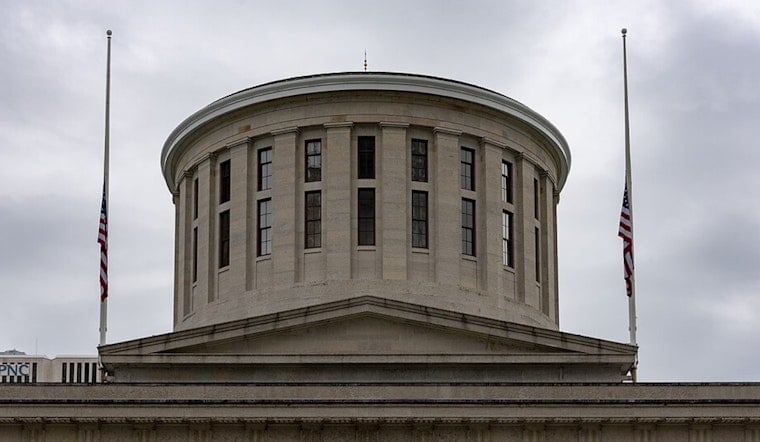
House Bill 862 would give Ohio’s monopoly electric utilities a new route back into building and owning nuclear power plants, and opponents say it looks a lot like a sequel to the customer-funded model behind the HB 6 scandal and years of costly litigation. With refunds, federal probes and a high-profile criminal trial still fresh in many voters’ minds, critics warn the bill could lock future ratepayers into decades of payments while shielding utilities from the full investment risk.
Under HB 862, electric distribution utilities would be allowed to construct, own and operate nuclear generating facilities. The plan would also create an Ohio Nuclear Development Authority and a state “nuclear coordinator.” The Public Utilities Commission of Ohio would be empowered to issue both a nuclear project financing order and a final ratemaking order, and the bill sets up retail participation agreements with a statutory minimum 20-year term and automatic renewal language that opponents say would lock in long contracts to recover plant costs, according to the bill text from the Ohio Legislature.
Business and consumer groups are blasting the proposal as HB 6 all over again. The Ohio Manufacturers’ Association said HB 862 “revives the HB 6 playbook” and urged lawmakers to reject a structure that, in the group’s words, would let “utilities get guaranteed returns. Customers get the risk,” Ryan Augsburger said in a May 13 statement, according to the Ohio Manufacturers' Association.
Supporters counter that Ohio needs dependable, large-scale generation and argue that some nuclear projects are simply too expensive for private developers to finance without utility ownership or long-term contract guarantees. The measure is sponsored by Reps. Adam Mathews and Bob Peterson, and backers say lawmakers have to balance grid reliability and long investment timelines against consumer protections, as reported by Cleveland.com; the bill’s sponsors and procedural status are listed on LegiScan.
HB 6's Shadow
The timing is not subtle. HB 6’s controversies are still echoing across Ohio politics. FirstEnergy and related parties were tied to more than $60 million routed through outside groups during the HB 6 fight, and regulators and advocates have spent years sorting through the fallout. State orders and settlements in late 2025 directed substantial refunds and restitution to customers, including multi-hundred-million dollar remedies for utility misconduct. WFMJ noted the PUCO-era orders and proposed settlements returning money to ratepayers, and prosecutors’ recent criminal trial of former FirstEnergy executives ended in a hung jury in March, with a late September retrial scheduled, according to the Ohio Manufacturers' Association.
That history is exactly why watchdogs say guardrails matter. The HB 6 prosecutions, civil suits and regulatory orders offer a real-time case study in how easily state policy and rate mechanisms can be reshaped into subsidy schemes that shift risk onto consumers while rewarding insiders.
Economic Context And What Ohioans Already Pay
Supporters of HB 862 say the bill would mobilize private capital and speed new power plant construction. Critics respond with a stack of data arguing that Ohioans have already benefited from retail choice and market-based generation.
A 2023 academic study by Cleveland State researchers and coauthors found that resale and market-based generation were associated with lower consumer price growth in deregulated states. A separate analysis estimated that deregulation delivered roughly $3 billion a year in savings for Ohio ratepayers in prior years. A study posted on SSRN and Cleveland-area analysis cited in recent coverage provide competing snapshots of those savings; one recent accounting put cumulative consumer gains at about $37.5 billion through 2023, or roughly $261 a year per household, a benchmark advocates say lawmakers should keep in mind before reversing market rules, according to Cleveland.com.
How HB 862 Would Work For Customers
In practice, HB 862 would create a path for utilities to seek a nuclear project financing order from the Public Utilities Commission of Ohio. Once that is in hand, utilities could offer retail participation agreements that require participating customers to pay monthly charges equal to the facility’s net prudently incurred costs over the life of the agreement.
During those terms, the facility could be reflected in the utility’s rate base. After the retail participation agreements expire, regulators would compare the plant’s costs to market prices and adjust recoveries under the bill’s ratemaking language, according to the bill text from the Ohio Legislature.
Legal Implications
If enacted, HB 862 would reset where investment risk sits and raise fresh questions about prudence reviews, default approvals and the reach of regulatory oversight. Those are issues that routinely end up in rate-case litigation and could easily spawn new lawsuits.
Meanwhile, the criminal and civil fallout from HB 6 is still moving through courts and regulatory dockets, a backdrop that opponents say should keep lawmakers cautious, according to AP News.
What comes next bears close watching: the House Energy Committee’s hearings on the bill, any amendments that layer on strict prudence tests or sunset clauses, and early PUCO timing triggers in the text that could accelerate approvals if regulators miss statutory deadlines. Lawmakers will have to decide whether to back large nuclear projects with customer-backed contracts or lean on competitive markets and federal supports, a choice that will inevitably be measured against the lessons of HB 6.





