

























































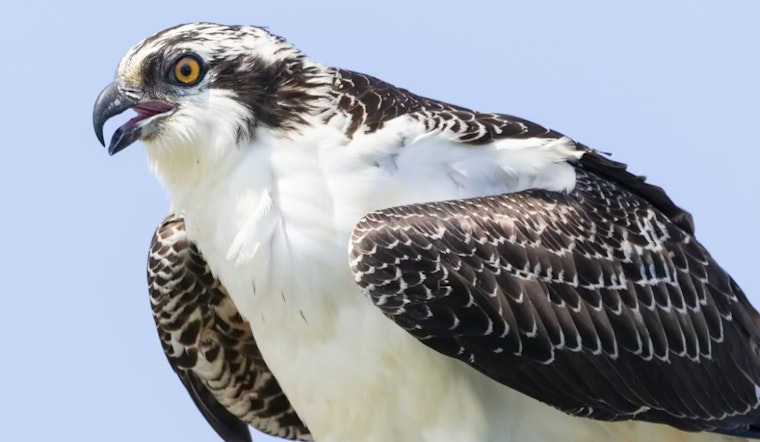
A routine nest check at the La Jolla Tennis Club turned grim when a local wildlife monitor reported seeing what appeared to be a dead osprey chick hanging from fishing line, tangled in a nest built high on a light post above the courts. The disturbing sight has the club stepping up its cleanup game and conservation advocates once again sounding the alarm about stray fishing gear along the coast.
Azi Sharif, founder and executive director of the nonprofit Wildlife Jewels, told club officials she first evaluated the nests on April 2 and then returned several times to keep tabs on the resident osprey pair. On April 30, Sharif says she saw a chick she believed was deceased, caught in fishing line on the side of the nest. She also reports seeing more seabirds getting snagged in fishing materials along La Jolla’s shoreline. In response, club manager Jon Ross said staff have increased cleanings on three affected courts, moving from about once a month to weekly or biweekly pickups, according to The San Diego Union-Tribune.
Earlier in April, local coverage detailed how Wildlife Jewels partnered with the club to monitor the nesting pair and manage the very practical problem of having a raptor family living just above active courts. That reporting captured public fascination with the birds and the club’s attempts to balance protection of the ospreys with court access for members, as reported by CBS 8 San Diego.
Fishing Line And Nests: A Dangerous Mix
Discarded monofilament and leader material are a familiar hazard for coastal birds. Strands can get woven into nests, where they wrap around a chick’s legs or wings or tighten around a growing bird. Wildlife Jewels has urged the public to dispose of fishing line properly, join beach cleanups, and report distressed birds to the appropriate authorities, according to Wildlife Jewels.
How The Club And Community Are Responding
Ross says the club is keeping a close eye on the light-post nests, trying not to disturb the birds while also keeping the courts playable. Debris pickup schedules have been increased in the areas beneath the nests to catch stray line and other materials before they become a problem. Sharif estimated the osprey parents will stick around another two to three months until the chicks fledge, and she has urged anyone who encounters an injured or dead bird to report it to the California Department of Fish and Wildlife so licensed rehabilitators and officials can respond. Reporting guidance is available from the California Department of Fish and Wildlife. Those recommendations and the timeline were reported by The San Diego Union-Tribune.
Protected Under Federal Law
Ospreys are protected under the Migratory Bird Treaty Act, which generally bars the taking, possessing, or transporting of migratory birds or their nests without authorization from the U.S. Fish and Wildlife Service. In practice, that means people should not remove nests, handle ospreys, or move protected birds on their own, even with good intentions. Instead, the guidance is to contact wildlife officials or licensed rehabilitators if you encounter an injured or deceased bird. More on the Migratory Bird Treaty Act and permitting is available from the U.S. Fish & Wildlife Service.



