

























































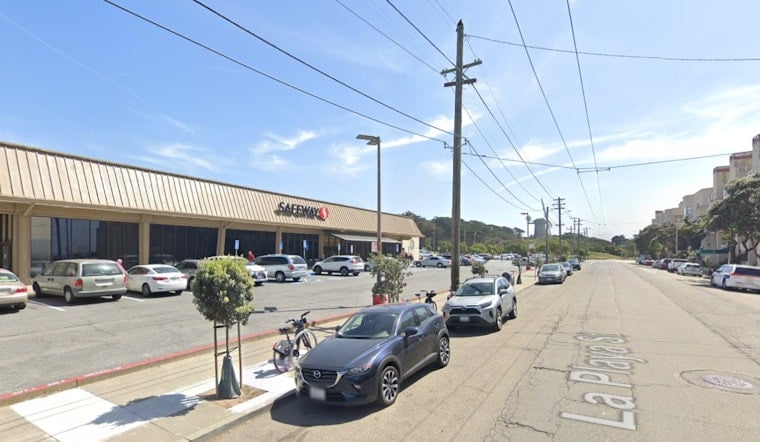
The battle over what happens to the Outer Richmond’s longtime Safeway at 850 La Playa Street is officially on. A plan to tear down the existing store and replace it with stacked housing over a brand‑new supermarket has neighbors lining up on both sides, arguing over traffic, parking and what happens when the only full‑service grocery in the area goes dark for construction.
Developers are pitching a classic San Francisco trade: more housing and a bigger, modern store in exchange for several years of disruption on a key Ocean Beach block. The formal application for the project, filed earlier this week, calls for roughly 526 homes built above a new Safeway, along with an expanded share of income‑restricted apartments, according to San Francisco YIMBY. The filing lists Align Real Estate as the project sponsor working on behalf of Albertsons Companies, Safeway’s parent company, and includes renderings that highlight mid‑block courtyards, below‑grade parking and an ocean‑inspired, stepped design that trims down the building heights at the corners.
The San Francisco Chronicle reports the 3.3‑acre lot would be transformed into roughly eight‑story buildings with a replacement grocery of about 59,000 square feet at street level and secured residential parking underneath. The Chronicle also notes that about 68 of the homes are proposed for low‑ and very‑low‑income households and that Safeway has pledged current employees will keep their jobs through the transition as the site is rebuilt. The paper points out that Align is pushing several similar Safeway makeovers across the city.
On the ground, reactions are already split, according to NBC Bay Area. Some residents told the station they like the modern, very stylish look, while others are bracing for backups and circling cars, with one neighbor warning, “I don’t like it because of the traffic.” A volunteer organizer with Grow the Richmond told NBC that developers increased the share of affordable homes and argued the project“meets a need, even as shoppers worry about where they will buy groceries once the existing store temporarily closes.
Part of a wider Safeway redevelopment push
The La Playa proposal is not a one‑off. It is part of a larger strategy by Align to turn several Safeway sites around the Bay Area into mixed‑use housing and retail hubs, a pattern that has generated thousands of proposed units and plenty of neighborhood pushback, according to The Real Deal. Supporters say big parking lots near transit are exactly where dense housing should go; critics argue the projects are so large they risk overwhelming local streets, schools and services.
What comes next
For now, the paperwork heads into City Hall. The application will move through the Planning Department’s review and public comment process, with timelines still murky, as reported by NBC Bay Area. Earlier coverage notes that Safeway expects a temporary closure of the current store during construction and that employees would be reassigned while the site is rebuilt, according to GrowSF. Nearby residents and local merchants say they plan to track staff reports and public meetings closely before any final approvals are granted.
Politics and zoning
The proposal is also landing right in the middle of a bigger political fight over zoning and how much power local officials really have when state housing laws come into play. The San Francisco Chronicle reports that Supervisor Connie Chan has moved to pull the La Playa site out of the mayor’s Family Zoning package and to steer large proposals like this toward more traditional local review. That maneuver could influence whether developers lean on state density bonus laws for extra height and units or stick with local discretionary approvals. The tug‑of‑war between state rules and neighborhood control is likely to shape the project’s ultimate size and schedule.
For now, the La Playa blueprint is functioning as a neighborhood Rorschach test. Developers are talking up new homes and jobs, residents are demanding firm plans to handle traffic and service impacts, and city officials are trying to balance rules, politics and public opinion. Expect environmental and traffic studies, detailed staff memos and at least one public hearing before anything is locked in. Meeting dates and documents will land on the city’s planning calendar as the review moves ahead.





