

























































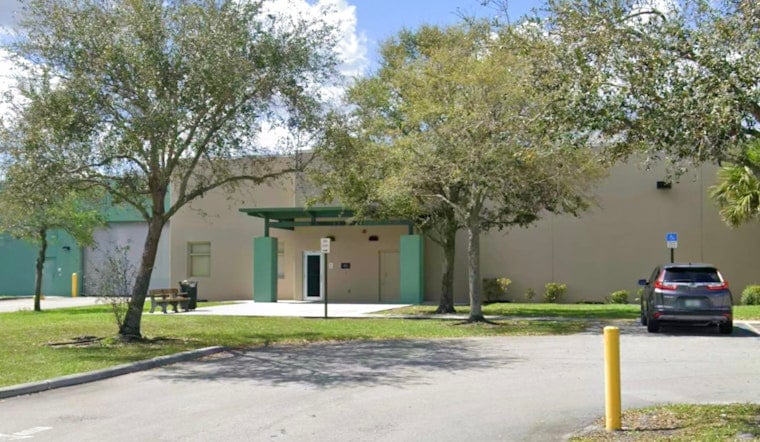
More than two dozen inmates at the Palm Beach County West Detention Center wound up sick after a series of overdoses that investigators say were fueled by synthetic cannabinoids smuggled into the lockup on sheets of paper. According to the Palm Beach County Sheriff’s Office and court records, a jail drug counselor is accused of teaming up with inmates to route the drug-soaked paperwork inside, a method known on the street as “paper dope.” Felony arrests and charges were filed this week against the counselor and several alleged co-conspirators.
Deputies say they opened an investigation after more than 25 incidents between September 2025 and January 2026, ultimately tracing the suspected pipeline to the West Detention Center in Belle Glade, a county facility listed on the Palm Beach County Sheriff’s Office website. Court documents identify Bakari Warthen, a drug counselor at the jail, as the alleged primary source who slipped drug-laced paper into official documents during counseling sessions, with inmate Jonathan “Kali” Lozano named as a key coordinator. Warthen, Lozano, Ariane Rodriguez and others were charged on May 19 with multiple felonies, including sale of synthetic cannabinoids, conspiracy and introduction of contraband into a detention facility, according to CBS12.
Investigators say they seized sheets of drug-soaked paper and identified several alleged accomplices inside the jail, including Drake Hamilton (“Draco”), Terry Courtney (“Turk”), Erick Jean Louis (“Skillz”) and Aerionte Jones (“Tata”). Outside the cellblocks, Rodriguez is accused of handling inmate payments through Zelle, Apple Pay and Cash App. Detectives estimated that a single sheet of the synthetic-laced paper could sell for roughly $1,000 inside the facility. “More than 25 incidents involving inmates overdosing or experiencing medical issues” helped trigger the probe, court records show, according to CBS12.
How 'paper dope' gets inside jails
Synthetic cannabinoids are often sprayed or soaked into paper or other porous materials, then smoked or heated, which can produce unpredictable and sometimes dangerous effects in the close quarters of a jail. Similar smuggling tactics surfaced in Jacksonville last year, where an investigation known as “Operation Stamp Collection” tied overdoses to ADB-PINACA-soaked paper and led to policy changes that reduced jail overdoses, as reported by News4JAX. Law & Crime and other outlets have chronicled similar cases around Florida, highlighting that paper-based synthetic cannabinoids have become a recurring correctional-safety problem; see Law & Crime for background reporting.
Legal implications
Bringing contraband into a county detention facility is a felony under Florida law, and many synthetic cannabinoids are specifically listed as controlled substances. Those provisions form the backbone of the charges now facing the defendants. The contraband rules appear in Chapter 951 of the Florida Statutes and related corrections sections, while controlled-substance laws are set out in Chapter 893; both chapters are available on the Florida Senate website.
The investigation remains active, and the case will move through the Palm Beach County courts. County officials say they will continue reviewing policies on mail, visitation and counseling in an effort to choke off contraband before it gets inside detention facilities.





