

























































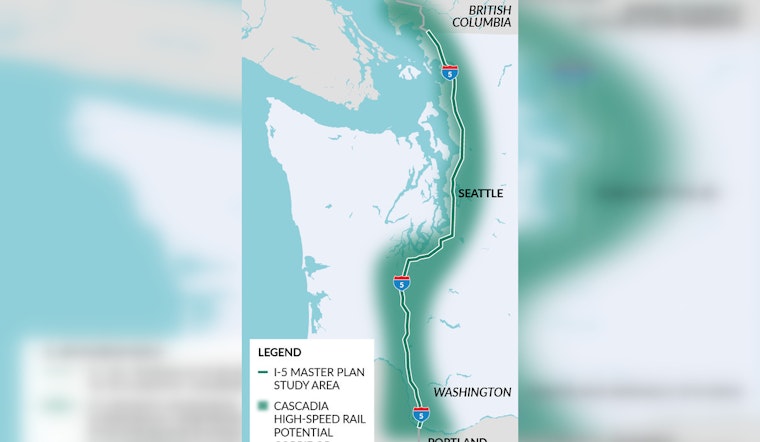
Portland’s business and civic heavyweights are turning up the pressure on Oregon’s new Prosperity Council, urging the governor’s advisory group to put the Cascadia high-speed rail plan near the top of its long-term economic wish list.
The pitch is straightforward: a bullet-train style line that could cut Portland-to-Seattle travel to about an hour, knit together the region’s labor markets, and unclog some of the Northwest’s worst traffic bottlenecks. The push comes as the council inches toward its final recommendations, due June 30, 2026.
In a letter to the council, Portland Metro Chamber president and CEO Andrew Hoan and Portland Mayor Keith Wilson pressed officials to treat Cascadia high-speed rail as a core economic development play, according to KOIN. They argued that Oregon’s competitiveness is being choked by chronic congestion and limited intercity travel options, and said a faster rail corridor could better connect workers to jobs while easing freight logjams.
Backers' projections: jobs, growth and travel times
Planning studies from WSDOT estimate the proposed line could unlock around $355 billion in economic activity and support more than 200,000 jobs tied to construction and operations. The business case envisions express trips between Portland, Seattle and Vancouver clocking in at under an hour, with dedicated tracks and trains topping out in the 220 to 250 mile per hour range.
Federal planning money already in the pipeline
The local lobbying follows a recent win in Washington, D.C. In December 2024, the Federal Railroad Administration awarded $49.7 million to kick-start service-development planning for the Cascadia corridor, a milestone highlighted by U.S. Sen. Cantwell. She and other officials have warned that the broader Cascadia megaregion is on track to absorb roughly 3 to 4 million additional residents by 2050, a growth surge that current roads and rails are unlikely to handle gracefully.
Where the Prosperity Council fits in
The Governor's Prosperity Council, created by Gov. Tina Kotek, is slated to deliver a package of recommendations to her office by June 30, 2026, according to the State of Oregon. Project supporters want high-speed rail clearly listed as a long-term priority. They say a formal nod from the council could help line up state, federal and private commitments for environmental reviews, route work and station-area planning.
What's next and the caveats
Even the project’s biggest fans are not pretending this will be cheap or quick. Earlier feasibility studies pegged construction costs somewhere between about $24 billion and $42 billion and mapped out a build-out timeline that stretches over multiple decades. Skeptics and fiscal watchdogs are expected to press the council and lawmakers for specifics on who pays what, how stations are sited fairly, and whether the timetable is remotely realistic as the Prosperity Council wraps up its work.





