

























































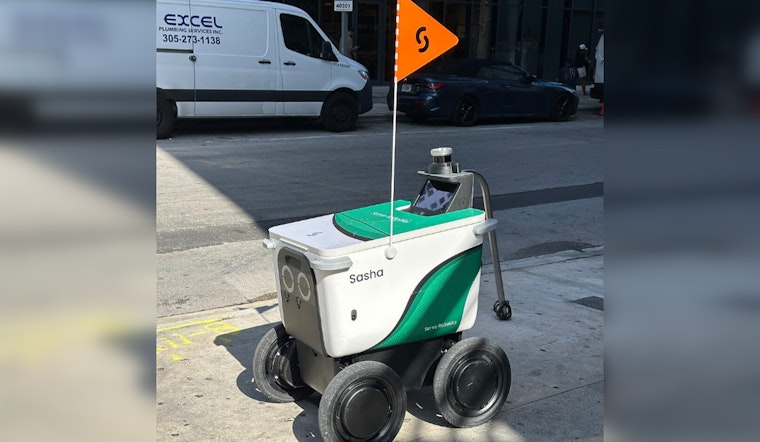
Sidewalks from South Central to Del Rey and Little Tokyo now have a new regular: Serve Robotics' delivery bots. What started as a limited pilot has quietly turned into a citywide presence, with small wheeled couriers ferrying food and packages across 40 Los Angeles neighborhoods and stirring fresh arguments about safety, jobs and who really owns the sidewalk.
Serve has more than 500 sidewalk delivery robots working in Los Angeles, a sharp jump from service in just two neighborhoods in 2023. The rollout is part of a broader national expansion that now reaches six metropolitan areas and roughly 20 cities, according to the Los Angeles Times.
How the fleet grew
Serve spun out of Uber’s Postmates unit in 2021, and the company says its autonomy platform now supports about 2,000 robots operating across six metro regions, according to Serve Robotics. That same announcement detailed Serve’s January acquisition of Diligent Robotics, which brought the Moxi hospital-assistant robots and indoor delivery know-how under the same corporate roof as its sidewalk machines. The strategy signals a push beyond curb-to-curb food runs in search of more stable and diversified revenue.
Why some cities are pushing back
Not everyone is rolling out the welcome mat. In early April the Glendale City Council voted to reinstate a moratorium on delivery robots, saying the city needed more time to figure out how to regulate the devices, according to Crescenta Valley Weekly. In Chicago, aldermen have capped or halted further expansion after residents and disability-rights advocates sounded alarms over sidewalk access and safety, as reported in a slams brakes on sidewalk robots neighborhood report.
Money and scale
Covering more neighborhoods is crucial to Serve’s pitch to investors, but the math is still in flux. In its Q2 2025 report the company described revenue as modest and projected that a fully utilized fleet of 2,000 robots could generate an annualized run rate in the tens of millions of dollars, while acknowledging it is still operating at a loss, according to Serve Robotics' Q2 report. Both investors and city officials are watching to see whether larger fleets and cheaper Gen-3 hardware can finally move the business from novelty to profitability.
What you’ll notice on the sidewalk
Serve designs its robots to stand out and behave in ways pedestrians can predict. Company filings and product materials describe touchscreen displays, light rings and brake lights, along with redundant sensors and mechanical fail-safe braking that help the bots yield at crosswalks and slow or stop when people are nearby, according to Serve Robotics' filings. The company says those layers of redundancy, including onboard LiDAR and cameras plus remote human supervision, are what allow its system to reach Level-4 autonomy in many real-world conditions.
For people in Los Angeles the verdict is split. Some like cutting out short car trips and getting deliveries faster, while others see crowded sidewalks and fewer shifts for human couriers. As cities write the rules in real time, your next order might arrive by person or by robot, and that tug-of-war between convenience and public space will continue to play out block by block.



