

























































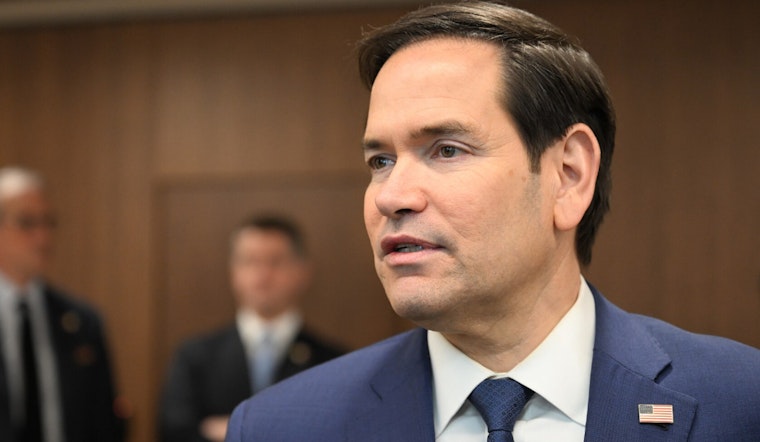
U.S. Secretary of State Marco Rubio landed in Helsingborg, Sweden on Friday and immediately started turning up the heat on NATO allies, pressing them to back up their defense promises with real money and hardware as the alliance scrambles to deal with fallout from the Iran war and a shipping choke point in the Strait of Hormuz.
Rubio used the foreign ministers’ meeting to push European partners for stepped-up defense investment and clearer commitments at a moment when Washington is signaling a smaller long-term footprint in Europe. That put the top U.S. diplomat squarely in the middle of two linked crises: frayed transatlantic trust and a vital shipping lane that remains largely closed.
At the two-day gathering, ministers zeroed in on how to turn broad spending pledges into concrete production plans, ramp up munitions output and prepare for the leaders’ summit in Ankara this summer, according to NATO. The alliance also took stock of developments in the Middle East and the security fallout of a Strait of Hormuz that is still largely closed, NATO said.
Rubio told reporters there had been only “slight progress” in talks with Iran and that major gaps remained. He said ministers weighed what role NATO might play in reopening and policing the strait if diplomacy runs aground, according to AP. He added that the United States needs a “plan B” if negotiations falter, AP reported.
Rubio Draws A Red Line On Tolls
One line Rubio made clear he does not want Iran to cross is any move to start charging ships for safe passage.
He warned that an Iranian attempt to impose fees on vessels transiting the Strait of Hormuz would be a red line, saying “it can’t happen” and cautioning that such a step would blow up the already fragile diplomacy, according to coverage of his remarks. Investing.com reported the comments, drawing on a Reuters dispatch.
Allies Rattled By U.S. Posture Whiplash
Rubio’s push came as allies were already on edge about fast-changing U.S. military plans in Europe.
President Trump announced the deployment of an additional 5,000 troops to Poland just hours after Rubio left for Sweden, a move that left European partners puzzled, according to The Washington Post. Rubio worked to calm nerves, telling ministers that the United States remains committed to collective defense even as it rethinks where its forces are stationed.
What This Could Mean
If NATO signs up for any role in policing the Strait of Hormuz, it would mark a significant operational shift with direct consequences for global energy supplies and shipping routes, according to AP. Diplomats are working through mediators in Pakistan and Qatar while markets and defense planners watch to see whether ministers can turn broad pledges into concrete ship-escort arrangements and munitions production plans.
Video of Rubio’s meetings with NATO ministers is available in a WTSP report that first flagged the visit. The station’s clip shows Rubio’s on-camera remarks along with some quieter hallway moments. As seen in WTSP, the sessions featured a string of one-on-one sit-downs and wrapped with a brief joint statement alongside NATO’s secretary general.




