

























































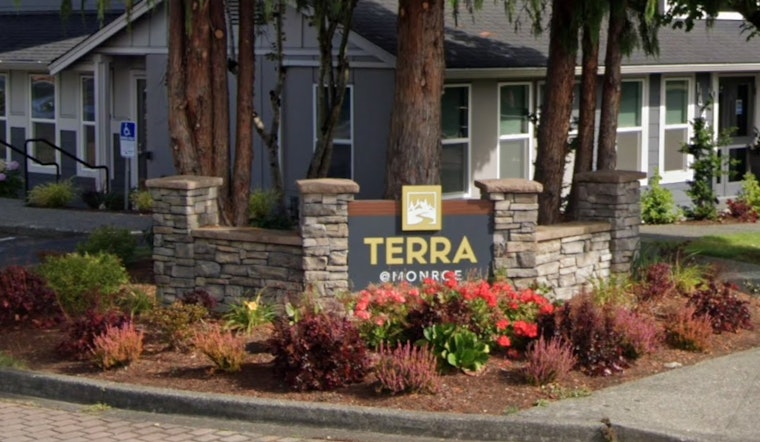
Sagard Real Estate has written a $66.5 million check for Terra at Monroe, a 222-unit garden-style apartment complex in Monroe, extending the firm’s Pacific Northwest buying spree and putting another big flag down just outside Seattle. The 20-building community sits on roughly 10 acres just off State Route 522 and offers one, two and three bedroom floorplans that date back to 1991. Sagard says it plans to modernize a portion of the units while running the property through its core-plus open-end fund.
Deal and buyer
In a press release via BusinessWire, Sagard Real Estate confirmed the acquisition of the asset at 18463 Blueberry Ln on behalf of its core-plus open-end fund and named John Maurer and Tyler Williams as the deal leads. CoStar reported the sale price at $66.5 million.
Property profile
Property data compiled by Yardi Matrix show that Terra at Monroe contains 222 units spread across 20 buildings, along with a standalone clubhouse and amenities such as a pool, fitness center and outdoor grilling areas. The community, previously marketed as Morning Run, offers floorplans of roughly 758 to 1,132 square feet and nearly 400 on-site parking spaces, giving it the kind of suburban setup that tends to attract long-term renters.
Ownership and financing history
Industry reporting by Multi-Housing News and commercial property records identify CEP Multifamily as the seller and note that the asset was acquired from Essex Property Trust in 2013. According to Multi-Housing News, the community carried a CMBS Fannie Mae loan originated by Berkadia that was scheduled to mature in 2028, a financing wrinkle buyers often weigh carefully when they price older suburban properties.
Market context
Investors have been drifting back into Seattle-area suburbs as fundamentals steady and deals start to pencil again. A Yardi Matrix market report shows that multifamily investment volume in the Seattle region climbed to about $3.9 billion across 76 assets in 2025, and average price-per-unit figures have been moving higher. In that environment, it is not hard to see why buyers like Sagard are hunting for workforce housing in supply-constrained suburbs, where renovation upside can look a lot more straightforward than the risks tied to ground-up construction.
What the buy signals
In its release, Sagard said it manages roughly US$6.0 billion in real estate strategies and described the Monroe acquisition as one that "aligns well with our fund strategy," underscoring a deliberate push into workforce rental markets outside core urban neighborhoods, per BusinessWire. Local operators say trades like this typically translate into targeted unit upgrades aimed at nudging rents and occupancy higher, while sidestepping the cost and disruption that come with full-blown repositionings.



