

























































For anyone nervously gripping the armrest out of Sea-Tac, a new analysis from Embry‑Riddle's Boeing Center suggests your flight is statistically safer than your weekend warrior routine. The research finds that U.S. commercial flying is far less risky than several everyday activities, including scuba diving, skiing and running a marathon. For Seattle, where Boeing and a sprawling aerospace supply chain support thousands of jobs, the numbers offer a data‑driven reminder that headline‑grabbing crashes are statistical outliers rather than the norm.
What the Study Actually Measured
The report breaks risk down in several ways, including per passenger mile, per trip, per hour of exposure, annual risk and lifetime odds, to compare U.S. Part 121 commercial operations with common recreational and occupational hazards, according to Embry‑Riddle Aeronautical University. Lead author Mihhail Berezovski said the goal was to arm people with enough context to think clearly about danger, noting in a press release via PR Newswire that the team wants the public to have correct, thorough and broad information so they can assess risk rationally.
How It Stacks Up Against Everyday Risks
The comparisons are not subtle. Coverage of the analysis reports that a single airline boarding is far less risky than a day of skiing or a recreational scuba dive, an hour spent flying is generally safer than an hour spent driving, and running a marathon is estimated to be roughly 200 times riskier than boarding a commercial aircraft, The Seattle Times notes. The paper also leans on distance‑based measures, estimating about one fatality per 90.9 billion passenger miles over the analysis period, a rate that comes in far below what highway driving produces.
Global Picture and 2025 Spike
Zooming out, the International Air Transport Association's 2025 Annual Safety Report shows that the overall accident rate improved worldwide, but the fatality risk ticked up to 0.17 per million flights in 2025, compared with 0.06 in 2024. IATA attributes that higher risk to a small number of high‑fatality events, including Air India Flight 171 and PSA Airlines Flight 5342, and reiterates that the long‑stated target for aviation is zero accidents and zero fatalities.
Industry Reaction and Seattle's Stake
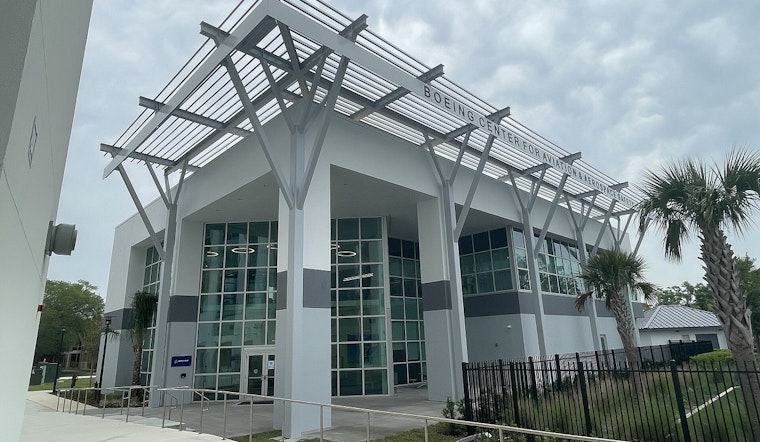
Embry‑Riddle and the Boeing Center have been careful to frame the work as education rather than self‑congratulation. Robert Sumwalt, the Boeing Center's executive director and a former NTSB chair, cautioned in a press release via PR Newswire that low risk does not mean no risk. At the same time, Boeing has been tightening its relationship with Embry‑Riddle, opening an engineering center at the university's Daytona Beach campus in 2024 that the company and Embry‑Riddle describe as a hub for hundreds of high‑paying jobs, a reminder that research and industry are tightly linked in aviation safety work.
What It All Means for Travelers
Set alongside independent academic work, including MIT studies that have documented a long‑term decline in commercial‑flight fatality risk, the Embry‑Riddle findings function as a reality check. Modern commercial flying is statistically extremely safe, even if a few clustered, high‑consequence accidents can nudge global totals in any given year. For travelers heading out of Seattle this summer, the takeaway mirrors the study's conclusion: lean on solid data, choose reliable carriers and nonstop routes when you can, and remember that safety is not about a single plane or pilot but about an entire system built to keep those outlier events as rare as possible.





