

























































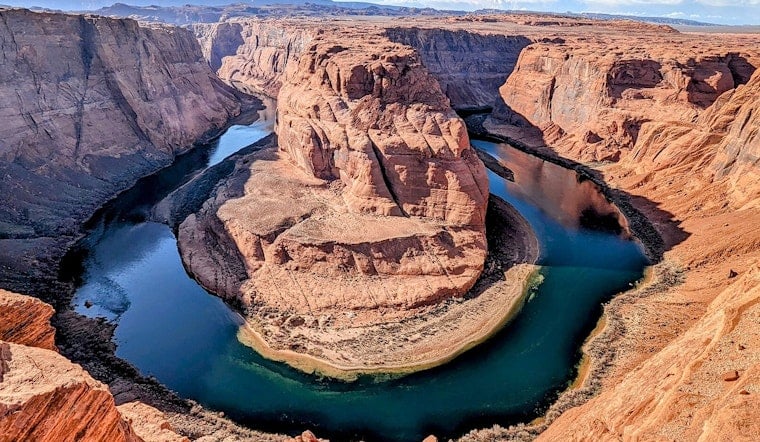
Arizona, California and Nevada have rolled out a short-term deal to leave extra water in the Colorado River through 2028, a tactical pause meant to prop up Lake Mead and Lake Powell while the bigger, longer fight over new river rules plays out. State leaders are pitching the package as a bridge that buys time for farmers, cities and tribes while federal officials run an environmental review. For Valley residents, officials say the move could lower the odds of sudden, federally ordered cuts that would slam agriculture and urban water supplies.
According to The Associated Press, the three states have proposed leaving up to about 1 million acre-feet of water in the system through 2028. When combined with reductions already announced by the states and Mexico, that figure climbs to roughly 3.2 million acre-feet. The AP reports Nevada and Arizona would give up roughly one-third of their normal Lake Mead entitlements, while California would trim its use by about 13 percent under the proposal.
What the proposal promises
Local business and economic groups in Phoenix are lining up behind the move and framing it as regional leadership in crunch time. AZ Big Media quotes Todd Sanders of the Greater Phoenix Chamber calling the pact "a testament to the power of regional collaboration," while Christine Mackay of the Greater Phoenix Economic Council casts it as a practical tool to protect growth and water security.
What it could mean for Phoenix and the CAP
The Central Arizona Project, the 336-mile canal that hauls Colorado River water to metro Phoenix and central Arizona, sits at the center of any future cuts, and local water managers are watching closely. KJZZ reported that CAP leaders see the plan as a lifeline, while Tucson.com noted that federal officials have floated more than $450 million in spending to support conservation programs that would make those voluntary reductions possible.
Federal review and basin tensions
Federal agencies still have to bless the deal. The Washington Post reports that the U.S. Bureau of Reclamation is reviewing the states' offer while also pursuing emergency moves, including extra upstream releases from Flaming Gorge and adjusted releases from Lake Powell, in an effort to keep the big reservoirs operating. Colorado's negotiator, Becky Mitchell, told officials the Lower Basin proposal is progress but still falls short of fully protecting Powell.
The fine print on how the cuts will be carried out is still under negotiation, and officials say the details should be ready by August. AP reports that state negotiators are looking at tools such as paid fallowing, incentives to swap out thirsty crops and other funded conservation efforts, all of which will need significant federal and state dollars to scale up.
No one is pretending this is a permanent fix. The agreement is designed to avoid the most extreme outcomes, not to solve the Colorado River problem on its own. Officials across the basin keep pointing back to the need for a broader seven-state solution that tackles shrinking river flows driven by long-term drought and rising temperatures. For Arizona, the immediate test is whether this short-term package survives federal review and provides enough certainty to keep water moving through the CAP to homes and farms without triggering drastic emergency curbs.



