

























































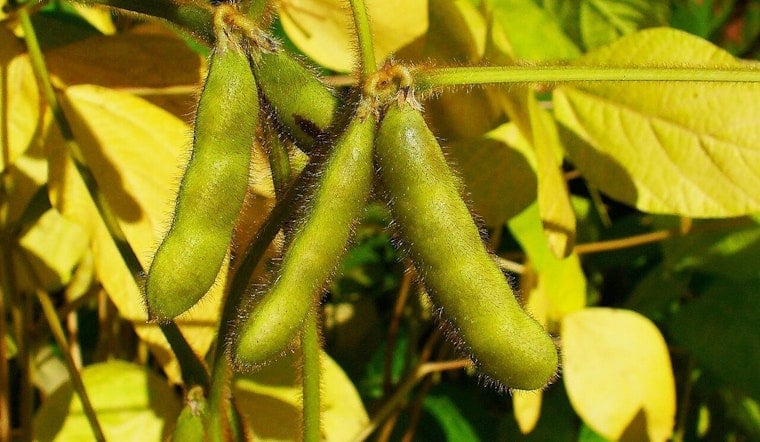
Illinois grows more soybeans than any other state, hauling in hundreds of millions of bushels a year, yet very few of those beans ever show up as tofu, soy milk or tempeh in local grocery carts. Export demand, the industrial crush sector, and livestock feed soak up most of the harvest, while a handful of small processors hustle to find much smaller lots of food‑grade, non‑GMO beans. That gap is a big reason locally made soy foods still feel like a niche in a state that loves to call itself the soybean capital.
Exports, feed, and the numbers
According to the Illinois Soybean Association, Illinois farmers harvested more than 639 million bushels of soybeans in 2025. Industry figures show roughly 60% of that mountain of beans heads overseas, and most of what stays home gets processed into animal feed. Human‑food processors are left competing over the thin slice that remains.
Why food‑grade beans are a hard sell
Food‑grade soybeans are not just a nicer version of commodity beans. They are usually non‑GMO, rely on older genetics and come with stricter weed‑control and identity‑preservation rules that drive up labor and handling costs. Farmers report a real yield hit, often 10 to 15 fewer bushels per acre, plus extra time to clean equipment, segregate storage and hit buyers’ exact specs. As WTTW notes, some growers who experimented with food‑grade contracts say the extra work no longer pays and have walked away from those varieties.
The money doesn’t add up
On paper, buyers sweeten the deal for food‑grade, non‑GMO soy. A U.S. Soybean Export Council report pegged average farm‑gate premiums at about $2.53 per bushel in 2025. At the same time, USDA projections put the marketing‑year average commodity price near $10.50 per bushel, so the total value of a food‑grade bushel often lands only modestly above standard beans. Once farmers factor in yield drag and extra handling, many say the math, lower output and higher hassle, simply does not work.
Policy, bridges and markets
Recent trade disruptions have made the problem harder to ignore. Gov. J.B. Pritzker declared an "agricultural export crisis" in October 2025 and ordered state agencies to build up domestic market options after China and other major buyers pulled back, as reported by NBC Chicago. Industry groups also flag infrastructure bottlenecks, including a large share of county bridges that are load‑restricted or in poor condition, as a practical barrier to steering more beans toward local food processors instead of export terminals. Fixing roads and bridges, advocates argue, is part of the basic groundwork needed to make domestic food channels realistic.
Small processors are expanding, but slowly
A few Midwest processors are trying to stitch together a true domestic food‑grade supply chain. In Chicago, small makers grind, cook and press thousands of pounds of beans into tofu and soy milk, and some companies are pushing USDA‑certified organic lines into regional Whole Foods and Sprouts shelves. The choke point is supply. Processors and farmers alike say consistently finding organic or non‑GMO food‑grade beans is tough, and keeping those beans separate from commodity crops is expensive and tedious, as documented in local reporting.
What comes next
Lawmakers and state programs are starting to chase solutions. A new Local Food Infrastructure Grant program and several smaller grants are designed to support processing, storage and distribution projects that could help local soy processors scale up. Even so, industry and farm leaders say the current $3.6 million set aside for those grants is more of a down payment than a game‑changer, and that larger investments in processing capacity and clearer, long‑term price signals will be needed before Illinois can realistically turn a big share of its millions of bushels into shelf‑ready soy food.
Reporting and data used in this story include information from the Illinois Soybean Association, the U.S. Soybean Export Council, USDA market projections and local coverage of Illinois production and processors. For on‑the‑ground perspective, see local reporting of processors and farmers.





