

























































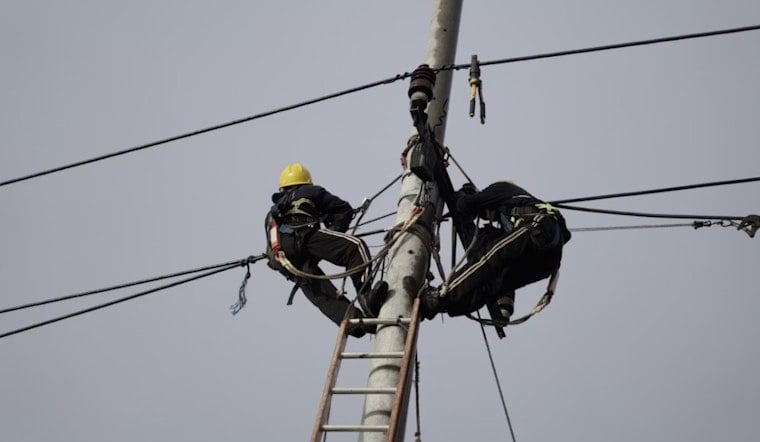
Hawaiian Electric crews are tearing out decades-old wooden poles and planting sturdier steel and composite replacements along a busy stretch of Honoapiʻilani Highway in Lahaina, a high-profile step in a two-year pole-hardening push tied to the town’s rebuilding after the 2023 wildfire. This week, workers were digging and staging equipment between Kai Hele Ku Street and Aholo Road as lines come down and new poles go up across roughly a two-mile corridor that doubles as a key evacuation route while limited undergrounding plans move ahead for select neighborhoods.
What crews are doing now
The targeted pole-hardening work started May 18 and is expected to run through the end of June, with 20 aging wooden poles slated to be replaced by 19 steel or composite poles along the nearly two-mile segment between Kai Hele Ku Street and Aholo Road, according to Hawaiian Electric. The utility describes the effort as its first “targeted area of critical pole hardening” in Lahaina and says crews will rely on traffic controls and signage to manage lane changes while the work is underway.
Limited plans to bury lines
Some community leaders have pushed for broader undergrounding, and Maui County Councilmember Tamara Paltin has voiced support for burying about 2.5 miles of lines along Lahainaluna Road that pass schools and dense neighborhoods, as reported by Maui Now. The same coverage quotes Hawaiian Electric’s Shayna Decker saying design work for targeted undergrounding is underway and that the utility is balancing those plans with quicker overhead measures so service can be restored without long delays.
Why undergrounding is costly
Hawaiian Electric planning materials put conventional undergrounding at roughly $11 million per mile compared with about $1 million per mile for overhead rebuilds, and the initial targeted undergrounding in Lahaina is expected to cover about two miles, according to Hawaiian Electric. The slide deck also highlights lower-cost approaches, including covered conductors and selective pole hardening, that the utility says can cut ignition risk without the lengthy permitting and trenching that large underground projects typically require.
Three-year shadow of the 2023 fire
The urgency behind the upgrades traces back to the Aug. 8, 2023, wildfire that devastated much of Lahaina; contemporaneous reporting described a snapped utility pole and a downed power line that helped ignite dry brush and fuel the fast-moving blaze. The catastrophe vaulted rebuilding and resilience planning to the top of local priorities and continues to put pressure on utilities and officials to show they are operating safer infrastructure, as AP reported.
Funding and regulatory questions
Federal grants are part of the broader conversation: watchdogs and regulators have asked how Department of Energy funding will be used and what strings might be attached, and they are still probing the utility’s insurance and liability posture tied to the Lahaina disaster. Civil Beat reported that regulators have pressed Hawaiian Electric for details on grant conditions and coverage as part of oversight of its wider resilience plans.
What residents should expect
Drivers can expect lane shifts, flagging crews and short delays while workers set new poles and string upgraded hardware. Local reporting notes the company already installed more than 70 steel poles in 2024 to rebuild a critical West Maui transmission route, and Hawaiian Electric says pole-hardening work will continue outward along Honoapiʻilani as rebuilding moves forward, with limited undergrounding reserved for the highest-priority corridors. Officials say the strategy is deliberately mixed: quicker overhead hardening to secure evacuation and service routes, paired with targeted undergrounding where technical and permitting hurdles allow it.



