

























































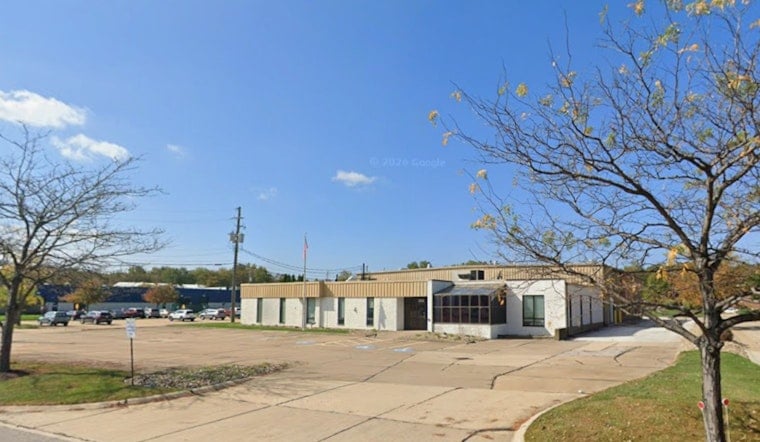
Steris is doubling down on Mentor, Ohio, putting roughly $60 million on the table for a new sterility assurance manufacturing plant that will pull its U.S. production under one local roof. The company has told investors it expects the facility to be up and running by late 2027, as part of a broader capital plan unveiled with its fiscal 2026 results.
In its fiscal 2026 financial release, Steris said it is planning about $375 million in capital expenditures for fiscal 2027, with the Mentor project accounting for around $60 million of that total over two years. The company described the site as a “state-of-the-art center of excellence” that will centralize existing U.S. production, according to STERIS.
Local angle and site strategy
Regional coverage has framed the move as a strong vote of confidence in the Cleveland suburbs, where Steris already operates manufacturing and administrative facilities. Rather than reaching into a new market, the plan focuses on consolidating U.S. production into a single Mentor hub, as reported by Crain's Cleveland Business.
What executives are promising investors
Company leaders walked investors through the project on their earnings call, saying the Mentor build is intended to centralize production and better serve healthcare and life-science customers. The call transcript notes the roughly $60 million price tag and an “end of calendar 2027” target for the facility to be operational, according to an earnings transcript from The Motley Fool.
Big-money plan, limited details
The Mentor facility is just one piece of a larger capital shuffle. Steris has flagged about $375 million in fiscal 2027 capex and signed off on a new $1 billion share repurchase program. Regulatory documents spell out that the Mentor project is included in that capital plan, but the company has not yet shared projected headcount for the site or any specific local incentive packages tied to the construction, according to SEC filings.
For now, key details such as the exact site layout, permitting schedule, and construction timeline are still under wraps. Local permitting records and future company filings are likely to provide the first hard clues about when ground will actually be broken and when hiring might start.




