

























































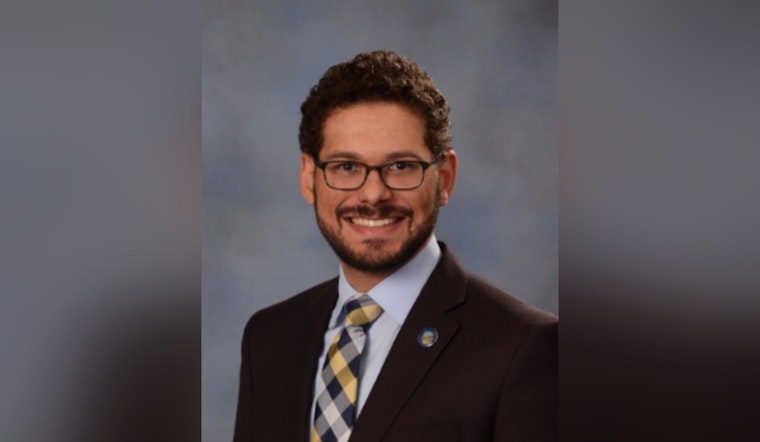
Central Las Vegas is getting a political plot twist this spring, as Democratic Assemblymember Howard Watts faces a serious intraparty challenge from Miguel Dávila, an MIT-trained urban planner who wants to remake how the city builds and houses people around the Strip.
Clark County's official candidate list shows Watts and Dávila as the only Democrats on the June 9 primary ballot. No Republican or third-party contenders filed for Assembly District 15, which means the primary is essentially the main event and the winner is heavily favored in November, according to Clark County Elections.
Dávila has centered his run on homelessness and boosting housing production, leaning hard on his planning background. His biography highlights an MIT degree and a stint at the Regional Transportation Commission of Southern Nevada. On the labor front, he has rolled out endorsements from Teamsters Nevada, LIUNA Local 872 and a long list of building-trades unions, and SEIU Local 1107 formally backed him this spring, according to SEIU Local 1107.
Watts, first elected in 2018, comes in with the advantage of incumbency and years of experience in Carson City. He chairs the Assembly Growth and Infrastructure Committee and points to legislative work he says is aimed at lowering costs for working families. Official records show he sponsored AB458 to expand access to solar for affordable housing and pushed measures in 2023 that would let Nevadans pay vehicle registration fees in installments, per the Nevada Legislature.
Money and backers
On the money side, Watts has a solid financial lead. Campaign finance reports compiled by Transparency USA show roughly $184,865 in contributions to his committee through March 31, with top donors including Boyd Gaming, MGM Resorts and the Solar Energy Industries Association. Dávila, meanwhile, pulled in close to $15,000 in the first quarter, with about $27,000 in cash on hand as of April 1, according to figures cited by the Nevada Current.
The gap is real, but Dávila is betting that union backing and an aggressive ground game can make up for lighter fundraising. Watts, for his part, is leaning on relationships built over multiple sessions, plus his reputation as a committee chair who can shepherd bills through the process.
Film tax fight reshapes endorsements
Some of the heat in this primary can be traced back to last year's special-session battle over a proposed $1.8 billion expansion of Nevada's film tax credit. That fight split Democrats and put lawmakers at odds with powerful business and labor coalitions. Reporting by The Nevada Independent details how unions and allied PACs have since been working to reset endorsements and independent spending. Those aftershocks are now reaching down into Assembly contests like AD15.
In a district that includes the Strip, where tourism, construction and service jobs collide, the question of which Democrat labor groups prefer is not just inside baseball. It is a window into how much sway unions will have over the next phase of Las Vegas growth.
What to watch and how to vote
With no other parties on the ballot in AD15, the June 9 Democratic primary is effectively the decision point for who represents the area in Carson City. The state election calendar lists primary day as Tuesday, June 9, 2026, with early voting scheduled from May 23 through June 5. Voters are encouraged to double-check polling locations and mail-ballot details against county notices and the official schedule, per Govbase.
Beyond district lines, insiders will be watching whether Democratic primary voters opt for an incumbent focused on incremental, inside-the-building wins or a planning-focused challenger pitching a more structural approach to housing and homelessness. Over the next several weeks, residents in and around the Strip can expect a steady stream of mailers, door knocks and dueling promises about how to speed up housing construction while protecting workers and long-standing neighborhoods.





