

























































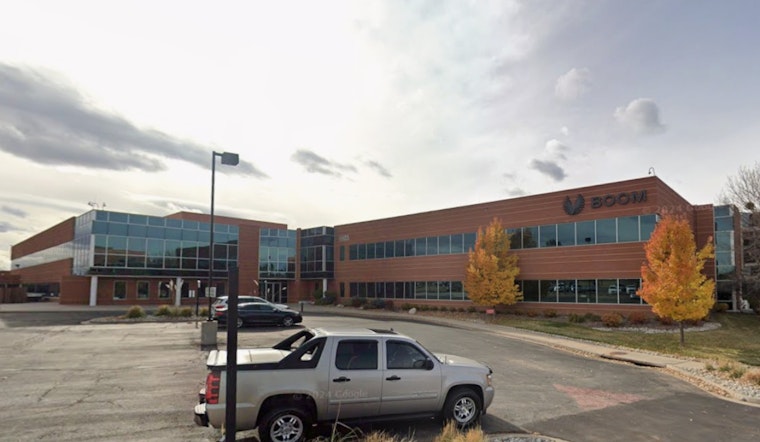
Boom Supersonic, the Denver-based startup behind the planned Overture supersonic airliner, is suddenly in the power business and hinting it might take that business out of Colorado. The company is pitching a new product called "Superpower" that repurposes its jet-engine technology into on-site electricity for energy-hungry AI data centers, even as state and local crackdowns on those same facilities have founder Blake Scholl openly talking about packing up.
A jet engine turned power plant
Boom says Superpower is a 42-megawatt natural-gas turbine tucked into a 40-foot, shipping-container-size enclosure that the company says can hold full output even in extreme heat. According to Boom Supersonic, the system uses the same Symphony engine core that underpins development of the Overture aircraft and is designed to operate without a dedicated water supply, a key talking point in the arid West.
Orders, partners and the money
Boom has moved quickly to turn the turbine idea into real revenue. The company closed a $300 million funding round late last year and says it already has a sizeable backlog for Superpower. As reported by TechCrunch, Crusoe agreed to buy 29 Superpower units, and Baker Hughes has confirmed in a company release that it will supply complementary generators that together amount to roughly 1.21 gigawatts of capacity for Crusoe. Baker Hughes says deliveries are scheduled through 2028.
Local regulators hit the brakes
Along Colorado's Front Range, communities are not exactly rolling out the red carpet for large new data centers. Local officials have slowed or paused approvals as questions about power demand, water consumption and round-the-clock noise stack up.
Jefferson County commissioners approved a 10-month moratorium on new data-center applications in mid-May, according to a county news release, and public maps show roughly 15 data centers clustered around Centennial Airport. That concentration has sharpened scrutiny from planners and neighbors who worry the area is turning into a permanent industrial zone in all but name.
Denver's one-year pause and community fury
The pushback is strongest inside city limits. On May 21, the Denver City Council voted unanimously to impose a one-year moratorium on new data-center permits while a working group studies zoning, energy, and water impacts, the Denver Gazette reported.
The Gazette notes that the only permitted data center currently under construction in Denver's Globeville-Elyria-Swansea neighborhood is CoreSite's DE3 at 4900 Race St., a project that has already drawn large community meetings and fierce criticism from residents who feel their corner of the city is being treated as a dumping ground for big infrastructure.
Scholl's exit talk and the AI law fight
Scholl has been clear that revenue from Superpower is meant to help bankroll Overture's aircraft development. He has been just as clear that he sees Colorado policy as a risk to both lines of business.
As reported by regional outlets citing the Wall Street Journal, Scholl said, "North Carolina would love to have us. Texas would love to have us. We might leave," framing Colorado's approach to data centers and artificial intelligence as a competitive disadvantage. He has criticized Colorado's earlier AI statute while calling a proposed rewrite an improvement, but not enough to keep all investment in the state. The texts of the bills are posted by the Colorado General Assembly.
Why Denver's leaders are torn
City and regional leaders find themselves walking a tightrope. Economic development officials warn that a broad pause on an entire sector sends the wrong message to employers and investors, while neighborhood advocates counter that water use, noise, and quality-of-life impacts from industrial-scale projects are already too high in working-class communities.
"A blanket moratorium on an entire industry is not the right tool," Metro Denver EDC Vice President Daniel Riley told the Denver Gazette, even as city officials argue that the pause will give them room to craft "thoughtful regulations."
For Boom, Superpower is both a much-needed revenue stream and a real-world testbed for engine reliability. For Denver, the fight over data centers has turned into a high-stakes negotiation over where the region's tech future will actually land. The work of the city's data-center task force, along with decisions by the Colorado Public Utilities Commission, will help determine whether Boom's turbines and the jobs that follow stay in Colorado or end up fueling someone else's boom town.



