

























































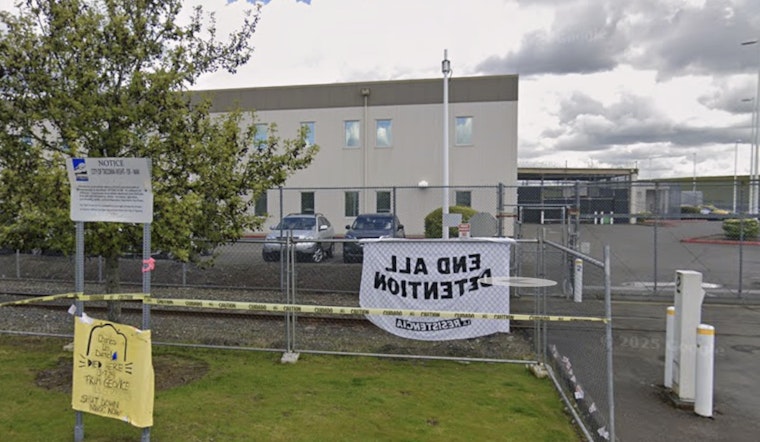
What started as a routine immigration check-in in March turned into a nightmare for Ky Sengdara, a longtime Raymond resident who first arrived in the United States as a child refugee. He was unexpectedly arrested at an ICE appointment and taken to the Northwest ICE Processing Center in Tacoma. This month he finally walked out of that facility after an immigration judge vacated a decades-old conviction tied to a 1999 drug plea, restored his lawful-permanent-resident status and terminated the government's removal case. Relatives had been camping on blankets outside the wire at the NWIPC as officials shuffled detainees in and out, a scene that has rattled Laotian families across the region.
Legal whiplash followed. Sengdara was flown from Tacoma to staging facilities in Arizona and Texas before ICE returned him for a hearing, where attorneys persuaded the court to vacate the 1999 plea on the grounds he had not been advised of immigration consequences. "They're moving me," Sengdara told his daughter by phone when agents re-detained him, and relatives say they did not learn he would be released until late the day of the hearing. The Seattle Clemency Project helped assemble pro bono counsel and says it has managed roughly 19 Laotian cases across the Northwest this year. Advocates say those cases are part of a wider enforcement sweep, as reported by KUOW.
Advocates and lawyers trace the spike in activity to federal policy moves. In June 2025, the White House issued a proclamation that imposed new travel and visa restrictions on several countries, a step that pushed Laos to begin issuing travel documents for returnees and that was broadened later in the year, according to the White House. Reporting and advocacy groups estimate that roughly 4,800 people with Laotian ties across the country have outstanding removal orders, a figure cited by The Washington Post. Local lawyers say the change in U.S. policy is what has turned decades-dormant orders into imminent removals for many longtime residents.
Records compiled by the Seattle Clemency Project and described in KUOW reporting indicate that deportees arriving in Laos are often held on military bases and allowed to leave only if they can connect with distant relatives or a sponsor, a process critics say leaves people effectively stranded. Local advocates warn that many of those facing removal were brought to the United States as infants or small children and have little to no connection to Laos, which they say heightens the human costs of the policy. These realities, lawyers argue, make speedy removals especially fraught for families who have lived and worked in Washington for decades, as reported by KUOW.
Legal and policy questions
Those individual cases are unfolding against a bigger legal and policy backdrop. The administration's broader deportation strategy includes agreements to send people to countries where they have no ties and a memo that allows rapid third-country removals in exigent circumstances. Reuters reported that an ICE memo said agents could, in exigent circumstances, deport migrants to a country other than their own with as little as six hours' notice, a practice civil-rights groups say undermines due process. Courts have at times blocked or narrowed parts of the program while other judges have allowed expedited removals to go forward, leaving the legal landscape unsettled for affected families.
Local advocates and lawmakers are pushing for relief and fast legal help for people with decades-old orders. Hoodline previously covered a related case in the region when a Bremerton father was detained after a decades-old gun conviction, a pattern advocates say is echoing in multiple counties across Washington; see Decades-Old Gun Case for one recent example. Community groups are pressing Congress to consider targeted relief and to expand funding for lawyers who can reopen old pleas and argue for vacaturs.
Sengdara has told relatives he plans to take a few days to breathe and be with family after his release, but advocates say his case is just one of many now racing through courts and detention centers. For Laotian and Hmong families across the Northwest, the push to carry out old removal orders has reopened wounds from the region's wartime past and raised urgent questions about process, safety and who counts as do-not-remove.





