

























































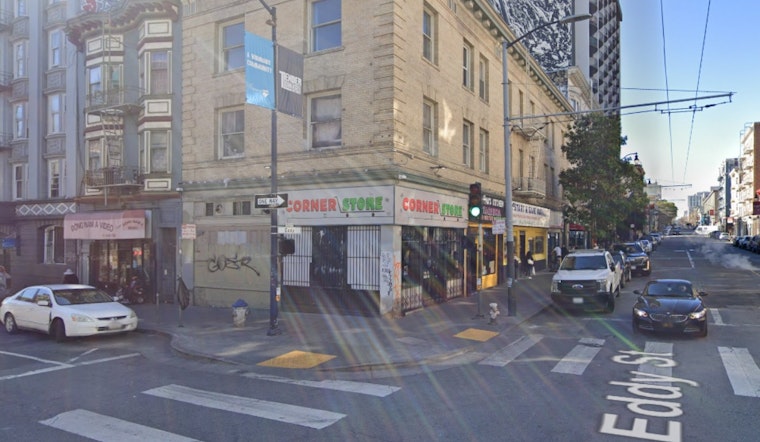
San Francisco city attorneys moved yesterday to shut down a Tenderloin corner store, alleging the small shop had quietly morphed into a behind-the-counter drug market stocked with meth, marijuana and paraphernalia. After inspections and dozens of police calls around the intersection of Eddy and Leavenworth, officials say they found narcotics, a weapon and items tied to the street-level drug trade. The civil complaint asks a judge to close the business for 12 months, framing the case as part of a broader push to rein in the neighborhood’s open-air drug markets.
According to the San Francisco Chronicle, the City Attorney’s Office filed suit to shutter the Corner Store after a November inspection allegedly turned up nearly 50 grams of methamphetamine, roughly five pounds of cannabis, a ghost gun and illegal tobacco products. The Chronicle reports that city officials also seized small plastic baggies and glass pipes commonly used to smoke meth and cocaine, and that police logged a dozen thefts, fights and other incidents around the shop between March 2023 and November 2025. City officials told the paper this is the 13th business the City Attorney has either sued or shut down in its campaign against what they call “problem bodegas.”
“The Corner Store didn’t just promote drug activity — it became the drug dealer,” City Attorney David Chiu said in a statement, according to the San Francisco Chronicle. Chiu and his office argue that civil nuisance litigation gives the city leverage to force evictions, temporary closures and other remedies when retailers are accused of sheltering criminal activity, city spokespeople say. The Chronicle notes it was not immediately able to reach the Corner Store’s owners for comment.
Part of a Wider Crackdown
City attorneys and police have been methodically targeting corner stores they say double as hubs for drug dealing, illegal gambling and the fencing of stolen goods. As outlined by the City Attorney’s Office, earlier enforcement actions uncovered slot machines, stolen merchandise and drug paraphernalia at other Tenderloin businesses and, in some cases, prompted property owners to evict tenants or settle. Officials say these nuisance suits are one piece of a broader strategy that also leans on undercover investigations and coordinated raids with the SFPD.
Curfew and the Ordinance
According to the Board packet authorizing the program, the city adopted a two-year pilot that allows officials to bar certain retail food and tobacco establishments in the Tenderloin from operating between midnight and 5 AM, and authorizes the City Attorney to pursue enforcement actions and fines. The details of that legal framework are laid out in the ordinance packet available from the Board of Supervisors. Local reporting notes that the multiagency Drug Market Agency Coordination Center has overseen large seizures and thousands of arrests tied to Tenderloin enforcement efforts, which officials say underscores the need for civil tools alongside criminal cases.
What the Lawsuit Seeks
The City Attorney’s civil complaint asks a judge to order a 12-month closure of the Corner Store and to enjoin the alleged nuisance activity while the case plays out. Under the pilot ordinance, violations can be declared a public nuisance, allowing the city to pursue administrative fines and other remedies while pressing property owners to address illegal conduct on their premises. A San Francisco Superior Court judge will ultimately weigh the city’s evidence against any defenses raised by the store’s operators.
Neighbors and some advocates argue that tough enforcement is necessary to tamp down open-air drug markets, while others warn that shuttering corner stores can strip low-income residents of already limited neighborhood services. For now, city lawyers are asking the court to lock the doors at Eddy and Leavenworth for a year as part of a neighborhood-wide effort to reduce street-level dealing.



