

























































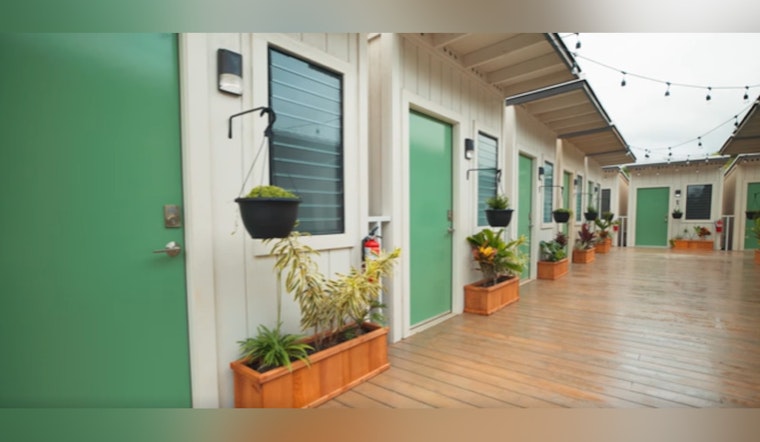
Ke Kauhale ʻo Luhia, a fresh cluster of tiny homes on the Waimānalo shelter campus, quietly opened this week, adding 20 new units to the existing 31-unit village on Saddle City Road. State and community leaders gathered for a blessing as the expansion folded into the state’s broader kauhale rollout. The new section pairs compact sleeping units with shared bathrooms, showers and a community kitchen, all designed to help residents stabilize and connect with services on site.
According to Hawaii News Now, the addition took roughly three-and-a-half months to build and cost about $1.6 million, ultimately finishing under budget after donations from construction partners. Rents per unit are expected to range from about $150 to $400 a month, and officials at the blessing pointed to the savings from prefabricated construction as key to keeping those rents deeply affordable.
How the site was built and who’s running it
The project was developed by HomeAid Hawaiʻi in partnership with state agencies and sits adjacent to the state-owned Waimānalo Emergency Shelter at 41-490 Saddle City Rd., according to HomeAid Hawaiʻi. The organization’s project page notes that the Waimānalo Kauhale is made up of 20 prefabricated sleeping units along with shared communal facilities, and that Alternative Structures International, which already operates the neighboring shelter, will run services for the expanded village.
Audit questions and oversight
The celebration is unfolding while the statewide kauhale initiative is under review by the state auditor, following a preliminary memo that raised concerns about oversight, contract administration and apparent duplicate or unsupported charges in payments to HomeAid. As detailed by Honolulu Civil Beat, the auditor’s early findings flagged nearly $1.7 million in costs that may be unsupported or duplicative and said the issues “warrant immediate attention,” while the governor has continued to publicly defend the program’s results.
Early results and what comes next
State leaders point to recent declines in unsheltered homelessness this year - roughly 13% statewide, about 20% on Oʻahu and a steep drop in Waikiki - and say the kauhale model has already provided shelter and support to thousands, according to Hawaii News Now. Officials told reporters the state is aiming to build four more kauhale by the end of the year while trying to balance the speed of new construction with the added scrutiny from auditors.
For now, state and nonprofit leaders say they plan to cooperate with the auditor’s review while continuing to scale the program. How that balancing act plays out will help determine whether the state relies more heavily on no-bid contracting or tightens invoice controls in future builds, Honolulu Civil Beat reported. Community groups in Waimānalo emphasize that quick, locally grounded projects are crucial to getting people off the streets, and those voices are expected to shape any policy changes that follow.





