

























































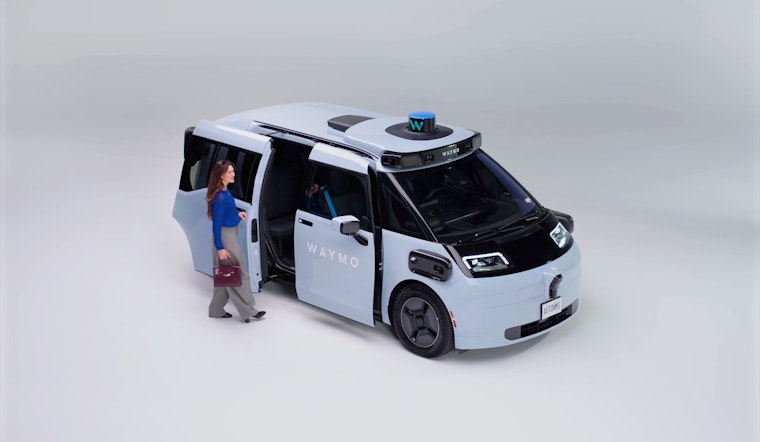
Waymo is inviting regular riders, not just test groups, to hop into its next-generation robotaxi, the Ojai, as the company works to scale driverless service across U.S. cities. The Ojai is a four-seat, purpose-built electric minivan, developed with Geely’s Zeekr and aimed squarely at ride-hailing trips instead of private ownership. The shift signals a move away from tight pilot programs and toward broader, city-level deployments.
Bloomberg reports that Waymo plans to put the Zeekr-built Ojai into regular service, starting with select riders. According to Bloomberg, those early trips will roll out in San Francisco, Los Angeles and Phoenix as Waymo gathers operational feedback. The company says this first wave of public rides will help it validate performance, rider experience and vehicle economics before scaling up.
The Ojai is replacing the familiar Jaguar I-Pace in Waymo’s lineup and leans into a boxier, passenger-first cabin that is built for hauling people, not impressing luxury-car shoppers. It also carries a simplified sensor stack that is intended to cut per-vehicle costs. The San Francisco Chronicle reports that the vans are manufactured by Zeekr, then outfitted in Arizona with Waymo’s sixth-generation Driver hardware plus heaters, wipers and fluid sprayers to keep sensors clear in bad weather.
Where you'll see the Ojai first
Waymo says the new minivan will debut for “select riders” in the Bay Area, Los Angeles and Phoenix before it becomes a more common sight in the app. In a company blog post, Waymo frames this limited-access phase as a test bed, meant to collect detailed rider feedback and fine-tune the service before a wider rollout.
How Ojai helps Waymo scale
The Ojai sits at the heart of a two-pronged scaling strategy that pairs a simpler, dedicated robotaxi platform with more U.S. outfitting capacity. The Mesa, Arizona plant Waymo uses to install its Driver hardware is being expanded to handle higher volumes, according to CNBC, giving the company more room to bring additional vehicles online.
As that capacity grows, executives have set aggressive ridership targets that depend on adding both new vehicle types and new cities. Earlier coverage from Bloomberg noted that Waymo’s leadership is aiming for roughly 1 million paid robotaxi trips per week by the end of 2026 as the service scales.
Safety and scrutiny
The Ojai’s arrival comes on the heels of a rocky stretch for the company. A series of high-profile incidents led Waymo to pause some freeway routes and recall vehicles after a handful drove onto flooded roads. The Los Angeles Times reports that Waymo temporarily suspended all freeway operations while engineers work on software updates intended to better handle construction zones and severe weather.
Regulatory watch
State regulators are expected to keep a close eye on how Waymo weaves the Ojai into its existing permits and safety frameworks. Recent filings with the California Public Utilities Commission include technical updates and platform documentation specific to the Ojai.
For now, Waymo says the Ojai will appear only intermittently in its app as it gradually expands access and tunes its operations. Some early trips will be complimentary while the company collects feedback from riders, according to Waymo, giving people in San Francisco, Los Angeles and Phoenix a shot at trying the new robotaxi for free.




