

























































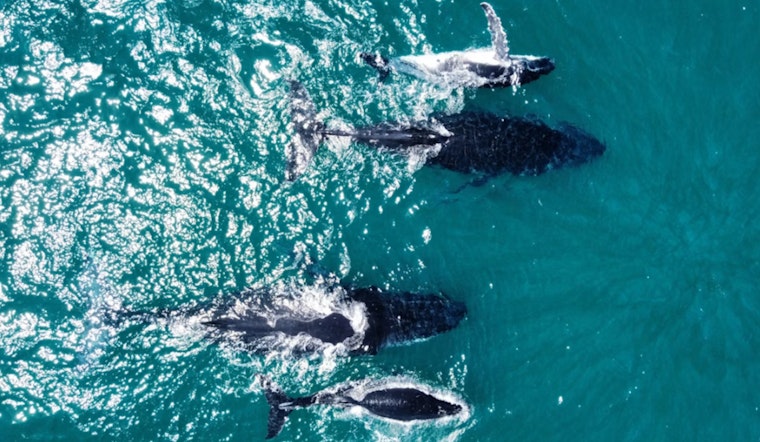
One low-flying research plane over Cape Cod on Wednesday found the ocean below packed with giants: the New England Aquarium's aerial survey team counted 222 humpback whales east of the Cape in a single pass, with the water churning from feeding and repeated breaches. The huge tally caps what has already been a hectic spring for big whales in southern New England waters.
According to WHDH, the Aquarium’s Anderson Cabot Center for Ocean Life crew logged the 222 animals during one survey flight and documented bubble-net feeding, kick-feeding, lunging, breaching and flipper-slapping. The station reported that the Aquarium views the unusually high count as a promising sign that whale activity in the region is kicking into high gear.
The Anderson Cabot Center at the New England Aquarium has been running systematic aerial surveys over southern New England since 2011 to build long-term data on whales, dolphins, sharks and sea turtles, work that helps track population trends, animal health and how different species use their habitat, according to the New England Aquarium. Photos and behavior notes from each flight feed into identification catalogs and give resource managers hard numbers to use when they weigh additional protections.
Why scientists think whales are gathering
Researchers say baleen whales show up where the food does. When plankton blooms and shifting ocean conditions concentrate copepods and other zooplankton near the surface, humpbacks and North Atlantic right whales follow those dense patches into Cape Cod waters, NOAA Fisheries notes. Changes in where that prey forms have already reshuffled whale distribution in recent years, making big aggregations more likely in some areas and seasons.
What boaters and whale-watch operators should know
Those dramatic survey counts do more than fill photo albums. They can trigger voluntary slow-speed zones and, when needed, mandatory Seasonal Management Areas that aim to cut down on vessel strikes and entanglements. The Aquarium has previously reported that its aerial sightings have prompted NOAA to set up Dynamic Management Areas and alert mariners when large groups of whales are detected, according to a New England Aquarium release.
Both NOAA and the Aquarium stress that a big surface-feeding swarm is a research gold mine, but it also means the same threats are crowding in: vessel traffic and fishing gear. NOAA continues to post real-time sighting advisories and tools for mariners, while the Aquarium keeps flying surveys and adding photographs to identification catalogs so scientists can follow trends in whale numbers and health over time, NOAA Fisheries reports.





