

























































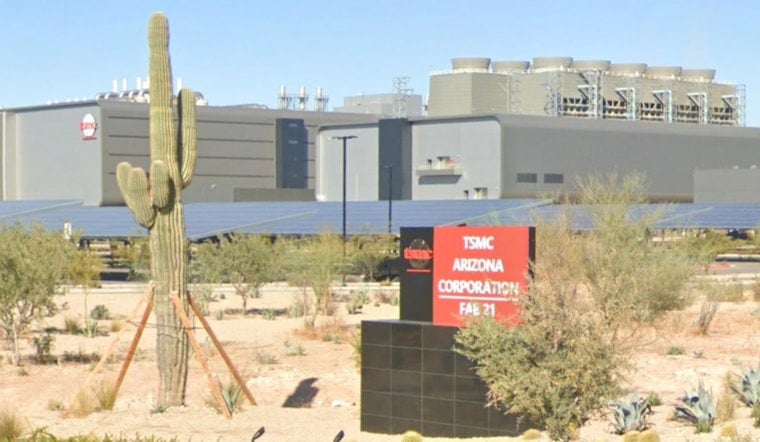
TSMC and Amkor just made their Phoenix romance official, signing a 10-year agreement that will keep advanced packaging and test work for Arizona-made chips in the west Valley. The deal links TSMC's north Phoenix fabrication complex with Amkor's planned Peoria packaging hub, promising shorter logistics chains, more local hiring and a tighter semiconductor supply chain that state boosters have been chasing for years. The announcement this week sent a ripple through investors and city planners tracking the region's chip boom.
According to a Business Wire press release, the companies entered a 10-year procurement agreement under which TSMC will buy advanced packaging and testing services from Amkor at facilities in Arizona. "We have a long history of experience working with Amkor globally in advanced packaging," TSMC's Kevin Zhang said in the statement. The companies said the partnership is meant to support accelerating demand for AI and high-performance computing chips and to create a more integrated U.S. supply chain.
Local footprint and timeline
Amkor is building a large advanced-packaging and test campus in Peoria while TSMC has expanded its north Phoenix fab campus, a pairing Phoenix Business Journal says will pump billions into the northwest Valley. As projects move forward, both companies are coordinating with state and local officials on infrastructure, workforce needs and neighborhood impacts, trying to match the construction pace with roads, utilities and housing that can keep up.
Federal backing and jobs
Amkor broke ground on the Peoria campus in October 2025 and later expanded the project's scope; the company says the two-phase buildout could reach roughly $7 billion and about 3,000 jobs. Per Amkor Technology, that expansion includes multiple cleanrooms and phased production starting in 2028. The U.S. Department of Commerce has also signaled support for the project under CHIPS incentives; Commerce Department materials describe preliminary terms for roughly $400 million in direct funding tied to the Arizona facility.
Why it matters for Phoenix
Keeping packaging close to wafer production cuts weeks off current turnaround times that now send U.S.-made wafers overseas for back-end work. That can speed product cycles for customers and lower logistics costs, which is exactly what the AI and data center crowd is hungry for. TSMC also highlights sustainability measures in Arizona, including an industrial water reclamation plan, along with a multi-fab roadmap that keeps more of the semiconductor value chain inside the state.
What to watch next
Local planners say housing, roads and water will be front and center as hiring ramps up, and nearby residents have already raised questions on growth and water use. Land deals and community concern around the north Phoenix campus have been in the spotlight, while the companies point to water-recovery projects and workforce training as key mitigations to watch as the agreement moves from contract language to real production.
For Phoenix, the TSMC-Amkor pact effectively stitches two halves of the chip supply chain into a single local economy, a practical step toward making more AI and data center chips in Arizona. Expect company filings and local planning meetings to become must-watch material as construction milestones and production timelines get locked in.





