

























































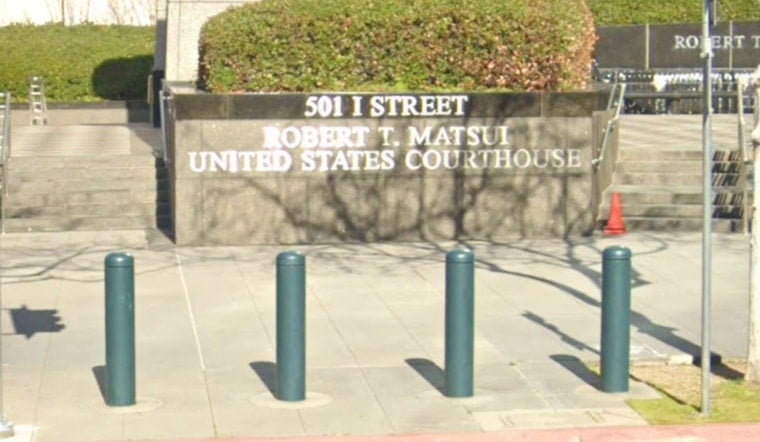
A new proposed class action in federal court is taking aim at how California buys its gas, accusing tech firm Kalibrate and some of the state's largest fuel sellers of quietly using an AI pricing tool to keep pump prices elevated. Filed June 22, the complaint claims the software effectively acts as a shared pricing brain that lets operators move in lockstep instead of competing, piling unexplained surcharges on everyday drivers and dragging the state economy for billions.
According to the class-action complaint in the U.S. District Court in Sacramento, the lawsuit targets Knowledge Support Systems, Inc., doing business as Kalibrate, along with retailers including Marathon Petroleum, BP Products North America, 7-Eleven/Speedway, Walmart, Circle K and Albertsons. The filing says those companies control more than 1,700 fueling locations in California and alleges they relied on Kalibrate's platform to automatically recalibrate prices across local markets.
As reported by the San Francisco Chronicle, the complaint cites Kalibrate's own marketing, which says that in practice its customers hand over as much as 90% of pricing calls to the algorithm. The suit flags long-running deals, including Albertsons since at least 2009 and Marathon since about 2020, as evidence that the tool is deeply embedded in the market. Plaintiffs also point to California pump prices that sit roughly a dollar or more above many other states and argue that automated coordination helps explain why the gap keeps hanging around.
How the suit says the system works
The complaint portrays Kalibrate as a centralized pricing engine that pulls in competitor prices, sales figures and supply data, then sends back recommended prices, sometimes straight to pumps and roadside signs, for participating stations. Bloomberg Law's read of the court papers notes that plaintiffs highlight product demos and user testimonials praising the software for stabilizing margins and smoothing out price swings. According to the suit, features labeled "restorations" can trigger nearly simultaneous hikes across a market, which plaintiffs say effectively nudges the local price floor higher.
Legal angle: AB 325 and the Cartwright Act
Plaintiffs are leaning on California's Cartwright Act alongside AB 325, a new state law that took effect Jan. 1, 2026 and bars the use of a "common pricing algorithm" when it is part of an agreement to restrain trade. Antitrust lawyers say AB 325 was crafted to keep companies from hiding price coordination inside software tricks such as auto-accept defaults, a concern explored in Cooley's recent analysis.
The complaint asks the court to award damages to every affected driver and to block further use of the Kalibrate tool, arguing that even a tiny price nudge adds up fast. Plaintiffs estimate that each extra penny per gallon costs California drivers about $134 million a year. Bloomberg Law notes that, scaled statewide, the filing casts those penny-level hits as a multibillion-dollar drag if the alleged coordination has been ongoing.
What regulators are watching
State officials were already eyeing odd pump prices this spring. The California Energy Commission's Division of Petroleum Market Oversight told lawmakers it has the power to compel records and testimony as part of its market-integrity work, according to a June 3 legislative hearing transcript published by CalMatters. The San Francisco Chronicle also reports that the state attorney general's office had not immediately commented and that Kalibrate did not respond to requests for comment.
For regulators, lawyers and any retailer dabbling in algorithmic pricing, this case could turn into a test run. Early motions and discovery are likely to dig into code, logs and demo materials, the kind of digital paper trail that might make AI pricing tools easier to challenge in court than the old cigar-room cartel playbook.





