

























































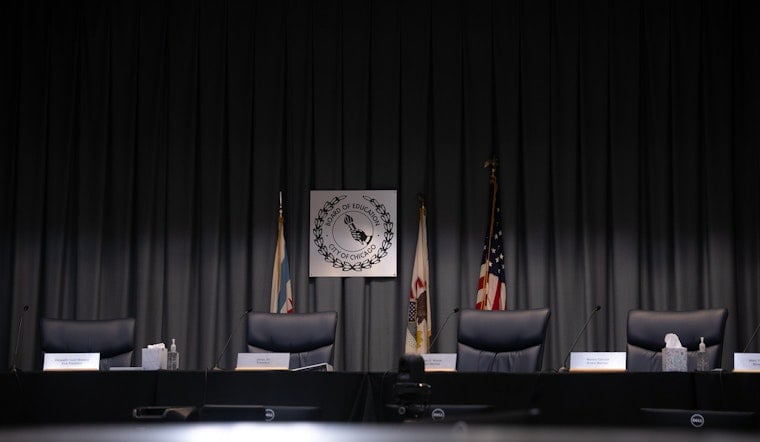
Chicago’s first fully elected school board race is already turning into a ballot brawl, with dozens of hopefuls scrambling to keep their names in front of voters after a blitz of challenges to their nomination petitions.
Candidates from neighborhoods across the city say they collected signatures expecting to coast onto the November ballot, only to land in painstaking page-by-page reviews and hearings this week. The fights come as Chicago prepares to seat a fully elected Board of Education for the first time this fall, raising the stakes for schools and communities that will live with the results.
Thirty-five objections have been filed against 28 candidates, and challengers argue that signature problems could knock “dozens” of contenders out of the running, according to the Chicago Tribune. At least 14 of those objections are tied to an organization listed in filings as the Urban Center, and officials told reporters that a single ruling on a disputed petition-circulator rule could potentially disqualify as many as 22 candidates. The targets include both first-time neighborhood candidates and several members appointed by Mayor Brandon Johnson who are now trying to win voter approval.
In all, 51 people filed to run for the 20 district seats and the citywide board presidency, creating the kind of crowded field that practically invites objections, per WTTW. The Chicago Teachers Union says it did not file any of the challenges and has publicly offered to help pay legal expenses for candidates who ask for support, the union told WBEZ. Election attorneys and campaign veterans note that defending against an objection often requires hiring a lawyer, a cost that can sink lower-budget, grassroots campaigns.
How the challenges hinge on circulators
Many of the objections revolve around a “dual-circulation” rule that challengers say bars petition circulators from gathering signatures for more than one candidate or from mixing partisan and independent petitions. Lawmakers tried to clarify that rule in a recent omnibus elections package, but the proposal did not pass, leaving a gray area that objectors are now exploiting in dozens of cases. Election lawyers describe the strategy as a technical way to thin out crowded ballots, while officials say the electoral board’s interpretation will determine how many names actually make it to November, according to the Chicago Tribune.
Small campaigns feel the squeeze
Plenty of candidates say they deliberately collected more signatures than the law requires to build a cushion, only to watch entire pages get tossed out over clerical mistakes or problems with circulator signatures. Both the city and the Board of Education provide written guidance for would-be candidates about petition rules and deadlines, and the board’s informational materials along with the Chicago School Board Candidate Summary Guide spell out the basic steps to get on the ballot, as outlined by the Chicago Board of Education. Even with those road maps in hand, volunteers say they are burning long hours tracking down signers and correcting paperwork once objections hit, often with limited time and money to mount a legal defense.
Legal implications
If the electoral board sustains the objections, candidates can take their cases to circuit court and, if needed, higher courts, potentially dragging the disputes into the summer and fall. The Chicago Teachers Union’s offer to help with legal bills could soften the advantage challengers gain by forcing expensive defenses, but outside groups and individual filers have been aggressive in zeroing in on technical errors. Lawyers caution that even campaigns that turned in extra petition pages can find themselves on the edge if critical sheets are thrown out and there is no attorney on hand to push back, as WBEZ reported.
The Board of Election Commissioners is expected to schedule hearings and issue rulings in the coming days, decisions that will decide which races actually appear on voters’ November ballots. Whatever the final lineup, the petition battles are already reshaping campaign strategies and the broader politics of Chicago’s move to a fully elected school board, with high stakes that include control over the district’s massive budget and the future of schools in neighborhoods across the city.





