

























































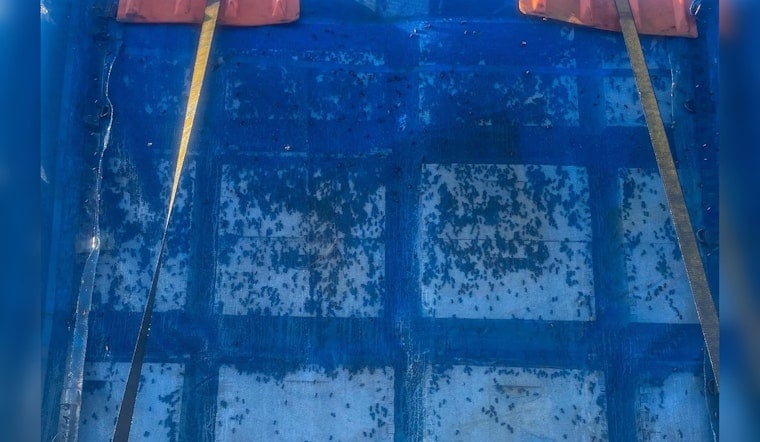
Northbound drivers on I-35 got an unexpected dose of rush-hour drama Wednesday when a trailer loaded with beehives started shedding bees near NE 36th Street in Oklahoma City. One lane was shut down as emergency crews moved in, with firefighters and police working to secure the load and keep motorists at a safe distance. Traffic crawled along the busy stretch while workers prepared to swap out the truck and remove the rolling hazard.
Oklahoma City police closed the northbound lane after a semi's trailer began spilling bees, and the Oklahoma City Fire Department was called in to spray water on the insects and calm the swarm, as reported by News 9. Police told reporters the truck would likely sit on the shoulder for roughly an hour while crews switched the load, and officials urged drivers to steer clear of the area and use alternate routes. The closure centered on the NE 36th Street exit, where lanes pinched down as emergency personnel worked alongside traffic.
Why bee loads sometimes spill
Hauling beehives on trailers is a standard part of commercial pollination work, but it takes careful strapping, covering and ventilation to keep colonies contained. The USDA's Animal and Plant Health Inspection Service (APHIS) notes that domestic bee movement is largely governed by state rules rather than federal import regulations, and experts say stressed colonies are more likely to break containment during long hauls. A review in Frontiers in Ecology and Evolution outlines mitigation strategies commercial beekeepers use to reduce escape risk during transport.
Oklahoma rules and expectations
Oklahoma law requires anyone moving colonies into, within or through the state to secure them "in a manner that prevents the escape of bees," a rule that underscores why transporters are expected to tightly fasten and cover hives on highways, per Justia. The state's apiary rules give agriculture inspectors authority to examine loads and, if necessary, order corrective steps when hives are judged to be a public hazard. Enforcement tools can include inspection, quarantine or penalties if colonies are moved unsafely.
How drivers can avoid trouble
Drivers planning to use I-35 are advised to check the Oklahoma Department of Transportation's live maps and the Drive Oklahoma app for updates and detour suggestions before heading into the area, since ODOT maintains real-time traffic advisories and safety guidance for lane-closing incidents. If you run into bees on or near the roadway, slow down, keep windows rolled up and follow instructions from emergency crews, who may block lanes or divert traffic while workers secure the load. Choosing alternate routes when an incident clogs travel lanes reduces the risk of secondary crashes and gives responders room to do their jobs.
At last check, crews were still on scene as the damaged trailer was prepped for removal and a replacement truck, and officials expected the closure to be temporary. This story will be updated as more information is released.



