

























































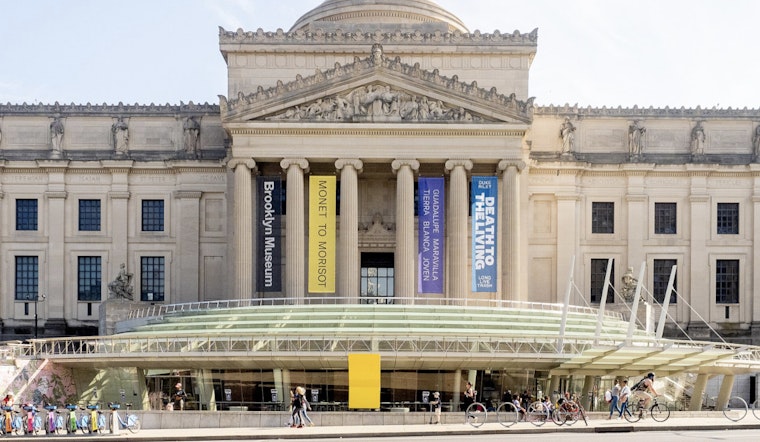
The Brooklyn Museum is gearing up for a roughly $48 million energy-efficiency overhaul that aims to slash greenhouse gas emissions and drag its aging mechanical systems into the 21st century. The sweeping renovation will rework how the building heats and cools, bring solar power onto the site, and tighten climate control in galleries that house some of the institution’s most sensitive collections. Museum officials say the goal is to cut operating costs while shrinking the building’s carbon footprint as the city pushes public institutions to decarbonize.
As reported by Brooklyn Eagle, the project, funded by the Department of Citywide Administrative Services and developed with the New York Power Authority, is expected to cut emissions by about 3,300 metric tons, roughly the same as taking 725 cars off the road. The plan calls for a carport solar array that will both generate clean power and shade parked vehicles, an electric humidification system to keep gallery conditions steady, and a conversion of the building’s steam heating plant to a high-efficiency hot-water system. The work also includes an electrified heat-recovery chiller, gas-fired condensing boilers, an advanced building-management system, and HVAC upgrades, and is slated to wrap by mid-2027, according to the report.
Project Scope And Timeline
As outlined by DCAS, a 2024 energy strategy identified the Brooklyn Museum as the city’s first candidate for a deep energy retrofit, with an earlier estimate of about $43 million in costs and an annual greenhouse gas reduction of roughly 3,700 metric tons. The report defines deep retrofits as a bundle of measures that, taken together, can cut a building’s energy use by more than half, including converting steam systems to hot water, adding heat-recovery equipment, electrifying HVAC and water heating, weatherizing the building envelope, and upgrading lighting and controls. Projects like this sit at the heart of the city’s plan to meet Local Law 97 limits on emissions from large buildings.
Citywide Push On Cultural Institutions
Brooklyn Eagle noted that DCAS has already led similar upgrades at other cultural institutions, including a $2.5 million chiller replacement at the Museum of the Moving Image, a $7 million chiller at the Fashion Institute of Technology, and a $17 million heating upgrade at the Bronx Zoo. City agencies have been ramping up investment in museum and cultural infrastructure to trim long-term operating costs while shrinking municipal emissions. For nearby residents, the Brooklyn Museum work could translate into a quieter, more efficient campus and steadier gallery conditions for delicate exhibitions and archives.
How Heat Recovery Helps Collections
Heat-recovery chillers capture thermal energy that would otherwise go to waste and redirect it to meet heating needs, a move that can significantly reduce on-site energy consumption and emissions, according to NYSERDA. The agency notes that heat-recovery systems can be tied into ventilation, water, and process systems and are already showing up in retrofit projects across New York. When paired with more precise controls and electric humidification, the technology can lower fuel use while keeping gallery climates more stable for fragile works, a constant concern for curators and conservators.
What Comes Next
The museum says construction is already underway and is expected to continue through mid-2027, although it has not yet released detailed schedules for individual galleries. City officials see the project as part of a broader pipeline of deep-retrofit work designed to help government operations meet emissions targets and bring utility costs down over time, a strategy described in the DCAS strategy report. Museum staff say programming will continue during construction, with partners and departments coordinating behind the scenes to limit disruptions for visitors and school groups.
Once the work is finished, the Brooklyn Museum’s retrofit will place it among a small but growing circle of cultural institutions retooling for a lower-carbon future. For Brooklyn neighborhoods, the upgrades promise cleaner energy use and a museum better prepared to safeguard art and artifacts in a warming world.





.jpg)