

























































California lawmakers have quietly defanged a closely watched transportation bill that originally took aim at the state’s reflex to solve congestion by adding more lanes. AB 2560, pitched as a way to lock the state’s Climate Action Plan for Transportation Infrastructure into law, has been rewritten after sustained pushback from industry groups and regional planners. The bill’s author and backers say the concessions were the price of keeping the measure alive, even if California’s highway‑first habit mostly survives for now.
Bill moves forward after major edits
After a fresh round of amendments, AB 2560 cleared its Assembly committee and then advanced on the floor, according to a committee transcript at CalMatters' Digital Democracy. The latest version, laid out in the bill text on California Legislative Information, would write CAPTI’s goals into statute and apply them, where feasible, within a "fix‑it‑first" framework. The earlier, more pointed instructions that told agencies to actively weigh options other than highway capacity expansion have been scaled back. Supporters argue the trimmed language keeps the bill politically viable while still setting a climate‑oriented baseline for future transportation decisions.
Author says he made concessions
Assemblymember Nick Schultz openly acknowledges that he stripped out the toughest anti‑widening language to get AB 2560 through its first gauntlet of votes. “I'll be very candid: It's not something that I wanted to do,” Schultz told The Sacramento Bee. He has recast the revised bill as a necessary first step that at least plants CAPTI’s principles in state law. In his telling, it was either accept weaker guardrails on highway expansion now or watch the proposal stall in committee entirely.
What CAPTI actually recommends
The Climate Action Plan for Transportation Infrastructure, produced by CalSTA, is blunt about one thing: "highway capacity expansion has not resulted in long‑term congestion relief." Instead, CAPTI urges the state to prioritize investments that avoid large increases in vehicle miles traveled. The stakes are substantial. The California Air Resources Board’s greenhouse‑gas inventory shows transportation is the state’s single biggest source of emissions, responsible for roughly 38% of the total. Adopted in 2021, CAPTI is meant to guide discretionary transportation dollars toward transit, walking and biking projects, and zero‑emission freight upgrades where that is feasible.
Industry and some regions pushed back
Major business and freight interests lined up against the bill’s earlier version. Letters from the California Chamber of Commerce, the California Manufacturers and Technology Association and the California Trucking Association argued that AB 2560 would lock in a "one‑size‑fits‑all" regime that ignores how different California’s regions actually are on the ground. Several rural planning agencies also warned that the framework could undercut long‑distance travel needs in their areas. Those objections helped drive Schultz’s rewrite, and several agencies later withdrew their opposition once the language had been softened, The Sacramento Bee reported. The end result leaves CAPTI’s high‑level goals intact while easing the pressure on highway projects specifically.
Fix50 is a reminder of the stakes
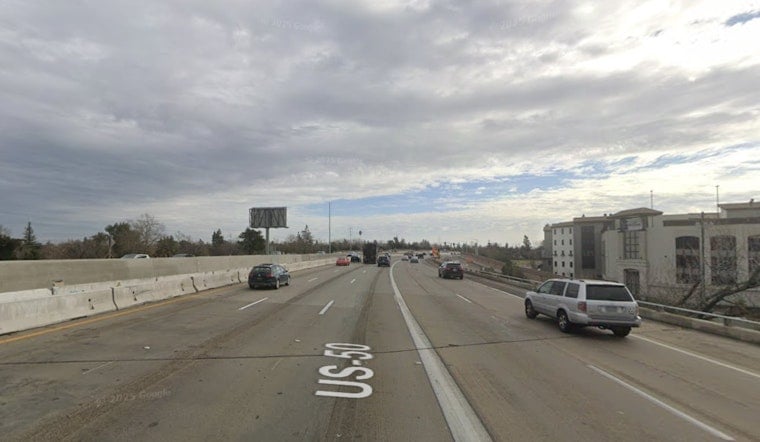
On the ground, local work like the U.S. Highway 50 Multimodal Corridor Enhancement in Sacramento, better known as the "Fix50" program, shows what is at stake. Caltrans describes Fix50 as a roughly $529 million effort that has added managed lanes and extended construction impacts in the corridor. Researchers at the UC Davis Institute of Transportation Studies, including Susan Handy, have long pointed out that expanding roadway capacity typically creates "induced travel"; when driving gets easier, people drive more, and long‑term congestion relief often disappears. For critics of lane‑adding projects, Fix50 is the kind of economic and day‑to‑day headache they cite when pushing for tighter limits on highway expansion.
What’s next
AB 2560 cleared the Assembly in late May and now heads to the Senate, where the language could be tightened again or watered down further as interest groups lobby lawmakers on both sides of the aisle, according to legislative records. The coming fight captures a broader decision point for California: whether to give CAPTI’s climate and equity priorities real legal teeth that could slow or curb lane‑adding projects, or to preserve wide discretion for regions that argue they still need more highway capacity.




