

























































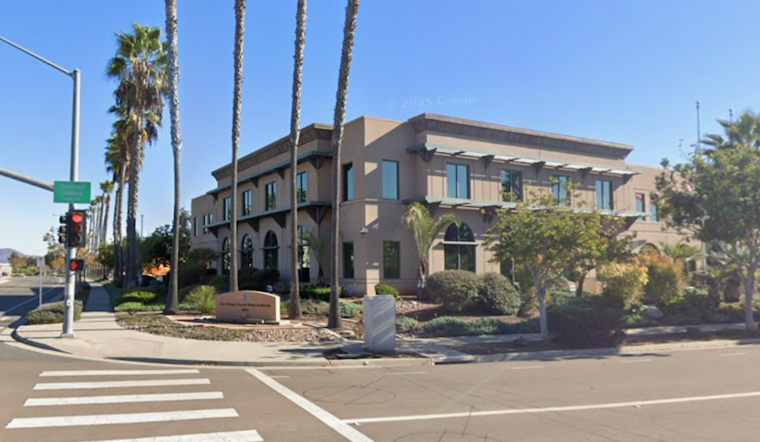
San Diego’s coastal desalination workhorse just stepped onto a much bigger stage, as federal and regional water officials on Wednesday gathered at the Claude “Bud” Lewis desalination plant in Carlsbad to sign a memorandum of understanding that could reshape how the drought-strained Colorado River basin shares water.
The nonbinding pact pulls together the U.S. Bureau of Reclamation and major utilities in California, Arizona and Nevada to study a mix of desalination, recycling and so-called “on-paper” exchanges that would move water entitlements through existing pipes and canals instead of building new ones. San Diego leaders say the concept could let the region’s coastal supplies quietly backstop inland communities while still protecting local reliability. Officials are quick to stress that the MOU does not alter anyone’s legal water rights and does not commit any agency to a specific project.
Signing at the Carlsbad plant were representatives from the Bureau of Reclamation, the San Diego County Water Authority, the Metropolitan Water District of Southern California, the Southern Nevada Water Authority, the Arizona Department of Water Resources, the Central Arizona Project and Salt River Project, as reported by Times of San Diego. The outlet notes that by relying on existing infrastructure, the agreement aims to avoid big new construction bills while preserving established rights, and that the effort is pitched as a way to help secure supplies for roughly 43 million residents across the three states. “As Colorado River conditions grow more challenging, regional partnerships like this are an essential tool,” Southern Nevada Water Authority General Manager John Entsminger told the paper.
The San Diego County Water Authority has pointed to the Claude “Bud” Lewis plant and the city’s Pure Water recycling program as the local supplies that make any exchange concept possible, saying the combination of seawater desalination and recycled water gives the region crucial flexibility. The Water Authority’s board signed off on the initial MOU in February, and its FAQ underscores that any transfers would occur “on paper,” with entitlement credits moving through existing delivery systems rather than anyone literally piping seawater inland, if a pilot program is ultimately approved, according to the San Diego County Water Authority.
How the exchanges would work
Federal rules already outline a path for voluntary interstate storage and release, allowing authorized entities to create intentionally created unused apportionment, or ICUA, that can be made available to other Lower Basin states in specific situations, as set out in 43 C.F.R. § 414. Under any such arrangement, the Bureau of Reclamation would be in charge of oversight.
The agency has been sounding the alarm for a while. In April, Reclamation warned that long-term drought has pushed total Colorado River system storage down to about 36 percent of capacity and announced actions intended to stabilize key reservoirs, according to a Bureau of Reclamation news release. Those legal and operational guardrails, combined with the grim hydrology, will shape whether a pilot exchange can actually get off the ground and what safeguards it would need.
Political and legal hurdles
Even supporters acknowledge there is a mountain of legal and political work ahead. Long-standing contract holders such as the Imperial Irrigation District and other senior rights-holders will have to be part of the conversation, and any real-world deal would also need tribal input and signoff from state regulators.
Local reporting has emphasized that approving an MOU is just the prologue, not the final chapter, and that any actual sale or exchange would require detailed negotiations, multiple layers of approvals and clear buy-in from existing rights holders, per Voice of San Diego. In practical terms, the MOU opens the door to planning and technical work but does not magically create a new interstate water marketplace overnight.
What’s next
For now, the MOU remains strictly nonbinding. The signatories have agreed to study feasibility, legal pathways and possible pilot options, and the Water Authority says it expects to work with its partners “over the next year or two” as they explore whether a pilot program pencils out. If they do get that far, San Diego officials have argued that selling or exchanging excess supplies could generate revenue that helps offset local costs and bolsters regional reliability, although no one is venturing guesses yet on exact volumes or prices.
On the legal side, federal rules make clear that voluntary interstate storage and release cannot change existing entitlements or expand anyone’s basic share of the river. Any exchange must preserve historic rights and follow procedures set by the Secretary of the Interior, along with required environmental review, as laid out in 43 C.F.R. § 414. That leaves this MOU as an important planning tool, but not a shortcut around the complex agreements and approvals that will still be needed before a single drop of Colorado River water is shifted on paper between states.



