

























































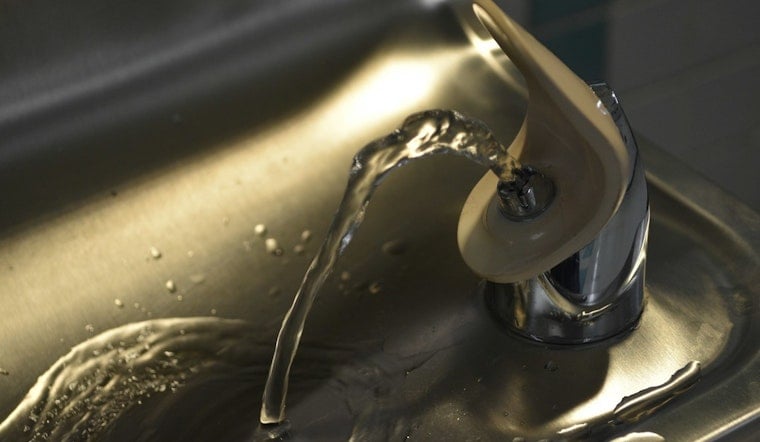
In a school system where old plumbing is practically a given, Chicago Public Schools building engineer Michael Ramos decided not to wait around for a massive construction budget. He built Noah, a small automated flusher that keeps water circulating through drinking fountains to limit lead leaching from aging pipes. The device has been running at Von Steuben High School and a handful of other CPS sites since a 2016 pilot, and lab and district tests tied to those pilots showed steep drops in measured lead at treated fountains. Ramos and his backers pitch Noah as a low-cost stopgap while full pipe replacement remains prohibitively expensive, but district leaders and public-health experts note that autoflushing only reduces exposure risk rather than removing lead service lines altogether.
How the Noah device works
Noah is a compact retrofit controller that triggers short, scheduled purges so fresh, treated water keeps moving through risers and fixtures. In district pilots, those flushes ran roughly three minutes every three hours. Ramos says he first installed Noah at Von Steuben in October 2016 and that early devices were donated to CPS pilots. Reporting linked those installations to large drops in fountain lead readings and noted that Ramos estimated a full district rollout would cost on the order of $10 million. Chicago Tribune
Independent testing and the pilot
Ramos laid out the program and its timeline in a written statement to Congress, saying he received permission to install the first Noah on Oct. 16, 2016, and later helped place units at higher-risk campuses where follow-up lab work found median lead results under 1 ppb after the devices were running. In that testimony, Ramos described powering the units from school lighting circuits so the flushes occur only during occupied hours and stop when buildings are dark. Congress.gov
Where that sits against state and federal rules
Illinois requires schools to address and notify families about fixtures that test above 5 parts per billion, and CPS says it follows state sampling and reporting guidance when a sample exceeds that threshold. At the federal level, the EPA’s Lead and Copper Rule sets a 15 ppb action level that triggers utility-level mitigation steps. Chicago Public Schools and the EPA provide the regulatory frame districts cite when they decide how to respond.
Scaling and trade-offs
Supporters argue the numbers are hard to ignore. Chicago reporting on the pilot notes that individual Noah units are inexpensive compared with major construction, with an inventor estimate putting a full district install in the single-digit millions, and a large school installation pegged around $20,000. According to the company behind Noah, each unit uses roughly a dozen gallons a day, which comes out to about $19 to $22 per year in Chicago, and can be retrofitted to most fountains in under 30 minutes. At the same time, autoflushing still uses extra water and depends on reliable power and basic maintenance plans. The device maker has been folded into Chicago’s water-tech accelerator pipeline as it looks for pilots and partners to prove it can scale beyond early CPS experiments. Chicago Tribune Noah System Co. mHUB
Patents, partnerships and oversight
The device has also brought scrutiny over who stands to benefit. Reporting by Chalkbeat found that a senior CPS facilities official appears on the Noah patent and that he and Ramos once formed a business to sell the units. CPS told reporters it had no evidence the official profited and that internal inquiries took place. Those disclosures highlight how easily invention, promotion and procurement can blur when district staff help develop the very products their employer might later buy. Chalkbeat
What comes next for schools and families
For now, Noah looks like a pragmatic stopgap. Pilots show autoflushing can hold lead readings well below state and federal thresholds at treated outlets, but it does not eliminate the underlying source of contamination in old service lines and lead-bearing plumbing. Districts weighing broader deployment will have to balance up-front hardware costs, water use and power logistics against years-long lead-line replacement timelines and public pressure for swift protections. Parents, meanwhile, may want to watch district postings and CPS testing reports for the latest fixture-level results. Chicago Public Schools





