

























































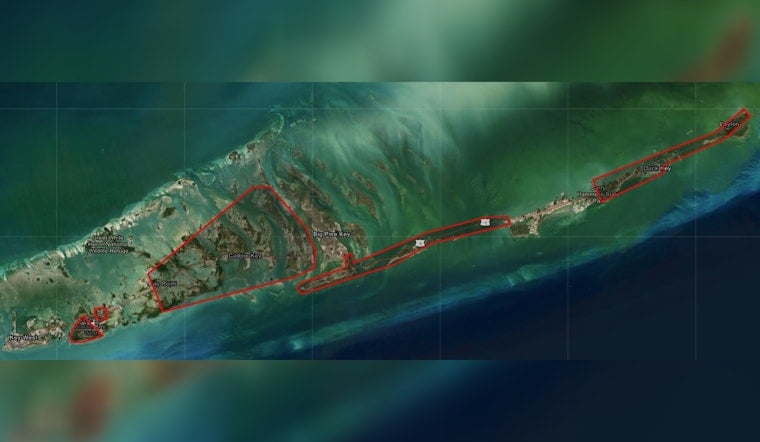
A major transmission main break on Conch Key left large stretches of the Florida Keys limping along on low water pressure Tuesday, with roughly 140 customers losing water service entirely, according to officials and local reports. Utility crews scrambled to isolate the damaged section while residents and businesses across multiple islands were told to treat their tap water with suspicion.
On its website, the Florida Keys Aqueduct Authority said repair crews were working valves to reroute flow around the break and warned that fixing the line could take 12 to 16 hours. The utility issued a Precautionary Boil Water Notice for areas where pressure dropped below 20 psi and said the advisory would stay in place until 3:00 p.m. Friday, July 3 unless updated, according to the Florida Keys Aqueduct Authority.
Local reporting confirmed the break occurred on Conch Key, about 14 miles north of Marathon, and that the outage knocked out service for about 140 customers while many more saw water slow to a trickle. Ashley Roberts, a public information officer for the utility, told the Miami Herald the complete shutoffs were concentrated in small pockets even as calls poured in from the Upper, Middle, and Lower Keys.
Islands On Alert
The advisory lists a patchwork of service stretches and island communities that fall under the boil notice. That includes the line from Conch Key (mile marker 61) toward Curry Hammock State Park (mile marker 56) and from Fiesta Key (mile marker 70) down through parts of Big Pine Key, along with areas such as Ramrod Key, Cudjoe Key, and Boca Chica. People in those zones were told to assume tap water is not safe to drink until testing clears the system. Utility officials said pressure should return gradually as crews pin down the break and bring additional pump stations online, according to the Florida Keys Aqueduct Authority.
Why The System Is Vulnerable
The damaged section sits on a transmission line that the utility has been replacing in phases. A photo caption in the Miami Herald notes the pipes are part of a roughly $42 million push to modernize aging infrastructure in the Upper Keys.
The utility’s 2024 annual report lays out the system’s size and why it can be so sensitive to a single failure. The Keys rely on nearly 197 miles of transmission mains and a web of pump stations, and the utility describes how crews use valves, alternate pumps, and spare materials to keep water moving when a break hits, according to the Florida Keys Aqueduct Authority.
What Residents Should Do
Under a precautionary boil-water notice, public health guidance is straightforward: bring clear tap water to a rolling boil for at least one minute before using it for drinking or cooking, or stick to bottled water. The Centers for Disease Control and Prevention advises using boiled or bottled water for infant formula, ice, and tooth brushing until local officials give the all-clear. Residents are encouraged to follow utility updates for test results and timing, and to review general boil-water guidance from the CDC.
How This Fits Locally
This is not the first time a single transmission line has thrown daily life in the Keys off balance this year. A break near Marathon in May triggered its own precautionary boil notice and turned parts of the Overseas Highway into a slow-moving parking lot while repair crews worked the line. Those repeat problems have fueled calls for faster replacement of critical mains and highlighted how one bad break can ripple across the island chain. See previous coverage of the Marathon incident in this water-main meltdown in Marathon report.



