

























































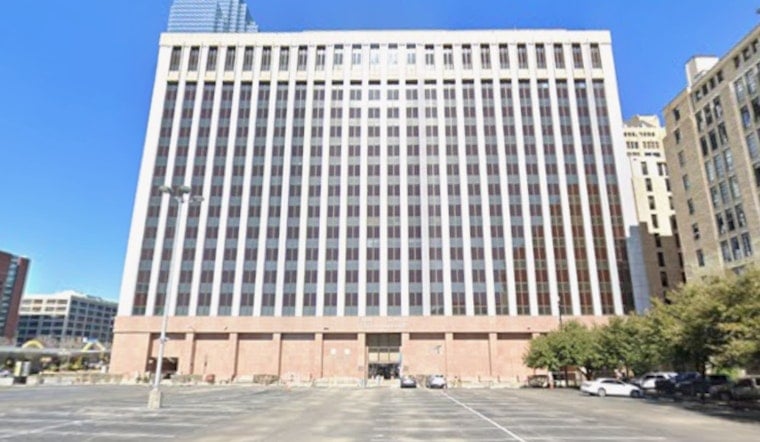
A 34-year-old Dallas man will spend the next three decades in federal prison after prosecutors said he turned sex trafficking into a brutal business model that preyed on nine women.
On Monday, a federal judge sentenced Chase Anthony Young to 30 years behind bars for running what authorities describe as a Dallas-based trafficking operation built on force, fraud, and coercion. According to court filings, Young posted online ads, booked hotel rooms for commercial sex, set the prices, and pocketed the proceeds, while the women he exploited have been suffering since at least 2017.
Sentencing And Survivor Testimony
Young pleaded guilty in October 2025 to federal sex-trafficking charges and admitted in court papers that he induced adult victims to engage in commercial sex by using force, threats, or fraud, according to CBS News Texas.
At sentencing, Assistant U.S. Attorney Brandie Wade told the court that investigators had identified nine victims and pushed for a stiff punishment, underscoring the one-sided nature of Young’s operation. “Young received all the proceeds; the victims received beatings and scars,” Wade said.
A victim impact statement read aloud in court described long-term trauma and the slow process of reclaiming a life after abuse. The statement ended with a clear declaration of independence from Young’s control: “He no longer has control over my voice.”
Federal Trafficking Crackdown In North Texas
Federal prosecutors in the Northern District of Texas have been pursuing lengthy sentences in trafficking cases, often teaming up with Homeland Security Investigations to target operations that rely on violence and exploitation.
For comparison, a 2023 Dallas trafficking case prosecuted in the same district ended with a 25-year federal sentence, according to the U.S. Attorney's Office for the Northern District of Texas. That kind of collaboration between federal prosecutors and HSI has been key to multiple recent investigations and convictions across North Texas.
Inside The Operation, According To Prosecutors
Plea papers and other court filings portray Young’s trafficking ring as a small but tightly controlled commercial enterprise. Prosecutors say he handled just about everything: the online advertising, the logistics of moving victims to hotel rooms, and the cash flow. He also enforced rules and quotas on the women he exploited, according to CBS News Texas.
Homeland Security Investigations led the probe, and prosecutors relied on Young’s own admissions along with victim testimony to secure the guilty plea that preceded his 30-year sentence. Officials did not publicly identify any of the victims at the hearing. Advocates note that while convictions can bring a measure of accountability, they are often only one step in what can be a long and difficult recovery for survivors.
The Law Behind The Case
Young was prosecuted under federal sex-trafficking statutes that criminalize exploiting people in commercial sex through force, fraud or coercion. One key law, 18 U.S.C. § 1591, makes it illegal to recruit, harbor, transport, or profit from commercial sex when force or coercion is involved. The statute allows for long prison terms, restitution and other remedies for victims; the full text is available via the Cornell Law School Legal Information Institute.
Sentences in sex-trafficking cases typically hinge on factors such as the presence and severity of force, the number of victims involved, and the defendant’s leadership role in the criminal enterprise.
Help And Resources For Survivors
Survivors, or anyone who suspects trafficking, can contact the National Human Trafficking Hotline at 1-888-373-7888 for confidential help at any time, day or night. Tips and requests for local support can also be submitted online through the National Human Trafficking Hotline.
If someone appears to be in immediate danger, authorities urge people to call 911 rather than attempt to confront suspected traffickers themselves.



