

























































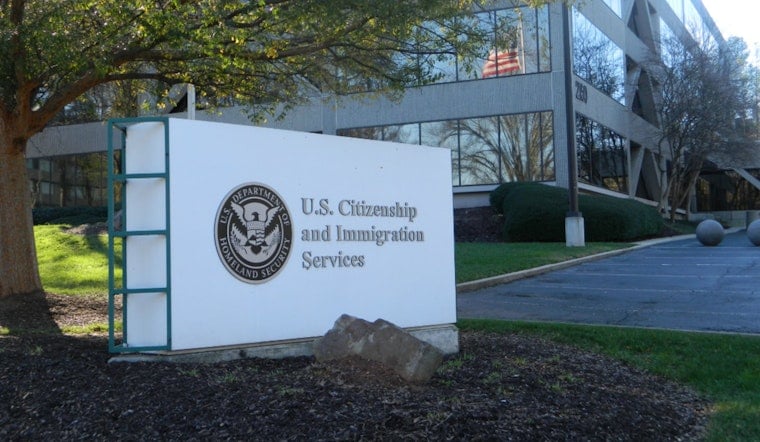
A national legal group is asking a federal judge in Washington to make the government cough up internal plans on stripping naturalized Americans of their citizenship. The Freedom of Information Act lawsuit lands just as the Justice Department this month moved to file denaturalization cases against 17 people, a surge that lawyers and civil-rights groups say will chill immigrant communities. The case and the uptick in filings have suddenly pushed a rarely used power into the center of the broader fight over immigration enforcement.
The Democracy Forward Foundation filed a Freedom of Information Act suit on June 26 asking a D.C. federal court to compel USCIS, DHS and DOJ to turn over records about "denaturalization initiatives, referrals, litigation, agency coordination, communications among senior officials, and related policy discussions," according to Democracy Forward. "We are pleased to be filing a court action today to uncover the nature of any denaturalization plans," the group's president Skye Perryman said in the release.
The Justice Department announced on June 8 that it had filed denaturalization actions against 17 naturalized U.S. citizens, accusing them of offenses that include sexual abuse of a minor, wire and bank fraud, and distributing drugs without a license, according to a department press release. The department framed the filings as part of a broader effort to "maintain a zero-tolerance policy for the abuse of this process," an Acting Attorney General statement said, and DHS Secretary Markwayne Mullin added that "American citizenship is a privilege, and it must be earned honestly." The Department of Justice described the individual complaints in detail.
Filings Spike In May And June
Data compiled by the Transactional Records Access Clearinghouse show a sharp rise in cases: the group found at least 15 denaturalization complaints in May and 18 more in the first half of June, after years of only occasional filings. The Transactional Records Access Clearinghouse warns that expanded grounds and digitized fingerprint reviews have widened the pool of potential cases. Reporting by Axios also said USCIS lawyers were being temporarily moved to assist DOJ, a sign the administration is trying to accelerate the pipeline of cases.
What Denaturalization Means
Denaturalization is a civil process through which a court cancels a naturalization order when the government shows that citizenship was "illegally procured" or obtained through willful misrepresentation under 8 U.S.C. § 1451. Courts generally require clear, convincing and unequivocal evidence before stripping someone of citizenship, a high legal bar that has historically kept denaturalization rare. See Cornell Law School for background on the statute and standards.
Community Concerns
Immigrant-rights advocates say the surge and the government's stated aims create fear among naturalized citizens and could chill civic participation. Advocates point to Democracy Forward's FOIA suit and media reporting that the push is part of a broader enforcement strategy, arguing the public has a right to see how agencies coordinate, concerns reflected in coverage by CBS News. Legal analysis from law firms and practitioners notes that the expanding program could sweep in many older cases and is expensive to defend, raising practical questions about access to counsel and evidence preservation; see Nixon Peabody.
What Happens Next
Democracy Forward's complaint asks the court to order agencies to search for and produce the requested records, and the case will move through the D.C. district court unless the government turns the documents over voluntarily. The outcome of the FOIA litigation could determine what, if any, internal memos or directives exist about plans to scale denaturalization, material Democracy Forward says communities need to prepare for possible defenses. Democracy Forward has posted its complaint and resources for affected communities.
The FOIA fight and the denaturalization filings are likely to play out in courts for months, shaping how far the government can expand this enforcement tool. For now, advocates and officials are bracing for more cases and more litigation that could reshape how denaturalization is used in immigration enforcement.



