

























































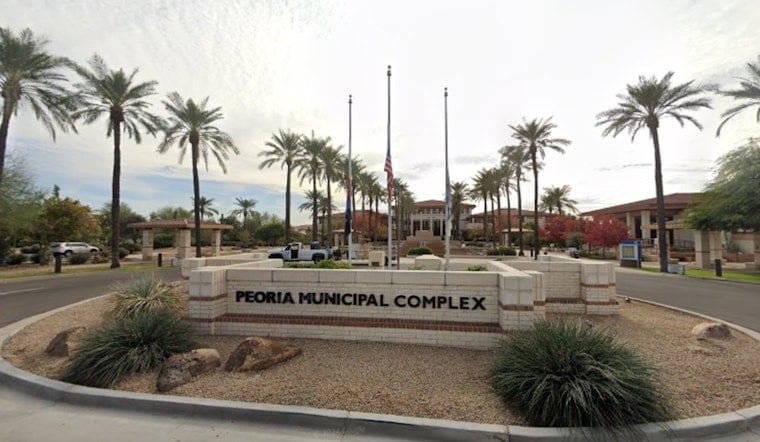
Peoria is quietly turning its stored water into political capital, inking a deal that could keep Cave Creek’s taps running as Colorado River shortages tighten. This week, the Peoria City Council signed off on an intergovernmental agreement to swap Central Arizona Project (CAP) water with the Town of Cave Creek, a short‑term lifeline aimed at softening the blow of looming river cuts.
Here is the basic trade: during declared shortages, Peoria would send CAP water to Cave Creek, and in return Cave Creek would deliver 1.1 acre‑feet of recovered long‑term storage credits for every 1 acre‑foot of CAP water it receives. Deliveries to Cave Creek are capped at 450 acre‑feet per year, the agreement runs through 2033, and Peoria collects a water‑recovery fee that starts at $460 per acre‑foot and climbs 3% annually to support the city’s well operations budget.
As reported by KTAR, Peoria’s council vote locks in an exchange city staff say will bolster Peoria’s assured‑water‑supply designation and further diversify a portfolio that already includes CAP allocations, SRP supplies, effluent, groundwater and long‑term storage credits. KTAR also details the fine print, from the 1.1 recovered‑credit return per 1 acre‑foot of CAP water to the 450 acre‑foot annual cap and 2033 sunset clause, and notes Peoria estimates roughly 25,000 acre‑feet of its CAP supply could be available for such swaps.
Cave Creek, for its part, has been scrambling for backup plans. The town is roughly 95% dependent on Colorado River deliveries and reports about 3,000 acre‑feet banked in underground storage, according to the Town of Cave Creek’s Town of Cave Creek. The town’s March press release and regional coverage have tracked staff negotiations with both Peoria and Surprise as the Valley reworks delivery routes ahead of expected CAP cuts next year, a scenario Cave Creek officials have been spelling out for residents for months. The Town of Cave Creek and KJZZ lay out that background.
Peoria is not exactly new to this game. A 2023 intergovernmental agreement with Tucson already mapped out the storage‑and‑exchange mechanics Peoria now plans to reuse, including Arizona Department of Water Resources reporting requirements, recovery‑well permits and formal exchange notices. The city’s council packet includes the full template IGA, and local reporting has tracked Peoria’s push to drill deep recovery wells that can turn those banked credits back into water at the tap. The City of Peoria and this report on how the city sinks $40 million into deep desert wells provide additional context.
How The Swap Works And Who Checks The Math
Water exchanges in Arizona do not run on handshakes alone. State law requires a stack of administrative steps, including Arizona Department of Water Resources approval, formal notices of exchange and coordination with the Central Arizona Water Conservation District, along with annual reporting and fee assessments for recovered credits. Those procedures and the recovery‑fee rules are spelled out in Arizona Revised Statutes and they dictate how cities track deliveries and collect money tied to recovered long‑term storage credits.
Next Steps
The Cave Creek Town Council is set to take its own vote on the agreement at a June 23 meeting, according to KTAR. If the town signs on, the deal still needs approvals from ADWR and the Central Arizona Water Conservation District before the paper agreement turns into water actually moving between systems. Officials in both communities describe the swap as a way to buy Cave Creek time while the town chases more permanent augmented supplies and infrastructure that can dial back its near‑total dependence on the Colorado River.
For now, the IGA looks like a pragmatic trade between a larger city sitting on stored CAP capacity and a smaller neighbor that badly needs short‑term, physically delivered water. If Cave Creek approves the agreement later this month, expect recovery‑well permits, ADWR filings and exchange notices to start popping up on regulatory calendars soon after.



