

























































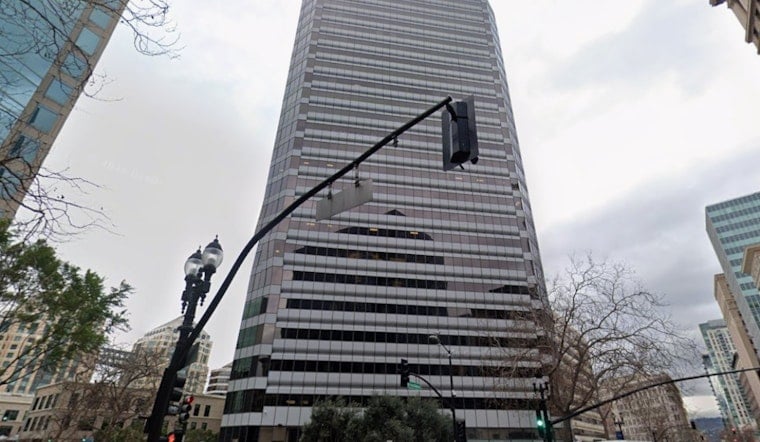
A landmark 24-story office tower that once served as the longtime headquarters of the Clorox Company has been turned over to its lender, a high-profile sign that Oakland’s already shaky downtown office market is still looking for a bottom. The owners executed a deed-in-lieu of foreclosure on Tuesday, effectively surrendering the building and putting one of the city’s most recognizable addresses under lender control.
According to county records and reporting by The Mercury News, an affiliate of Heitman Capital Management has taken title to the tower after a partnership led by KKR and TMG Partners handed it back. The deed-in-lieu was recorded with the Alameda County Recorder and reflects a direct ownership transfer instead of the usual public foreclosure auction drama.
Ownership history and building basics
TMG and KKR bought the tower in 2018 in a deal reported at roughly $255 million. TMG’s own materials list the property at about 535,714 square feet, a figure also cited by REBusiness, with Clorox and Brown & Toland among the marquee tenants. The high rise, long branded with the Clorox name, sits directly above the 12th Street BART station and has been a regular subject of downtown leasing chatter for years.
How the loan unraveled
Public records surrounding the transfer indicate KKR financed the 2018 acquisition with a sizable mortgage, and lender documents pegged the tower’s value at about $258.3 million as control shifted to the lender, according to The Mercury News. Since that deal closed, higher interest rates, weaker demand for office space and rising capital costs have chewed through the financial cushions that once propped up big city towers, Oakland included.
What it means for tenants and downtown
For now, Clorox still lists 1221 Broadway as its principal executive offices, according to The Clorox Company, keeping the consumer products giant in place as an anchor tenant even as the name on the ownership paperwork changes. The handback adds yet another distressed address to a growing list in Oakland’s commercial core and suggests lenders are increasingly willing to take buildings back rather than keep extending troubled loans, a trend reflected in recent coverage by The Real Deal.
Legal mechanics and next steps
A deed-in-lieu of foreclosure lets an owner voluntarily transfer title to a lender in order to sidestep a long, public foreclosure process. It typically gives the lender immediate control of the asset along with the option to hold, sell or reposition the property as market conditions and strategy dictate.
For tenants, the short-term concerns are straightforward: keeping day-to-day operations running smoothly, getting clarity on who is handling leases and management, and watching for any signals of a sale or renovation as the new owner maps out a plan.
The fate of the Clorox Building will be closely watched by developers, city officials and downtown tenants as a test case for how deep Oakland’s office slump might go. Over the coming weeks, tenant notices, any marketing materials from the lender and fresh county filings are likely to provide the clearest hints about the tower’s next chapter.





