

























































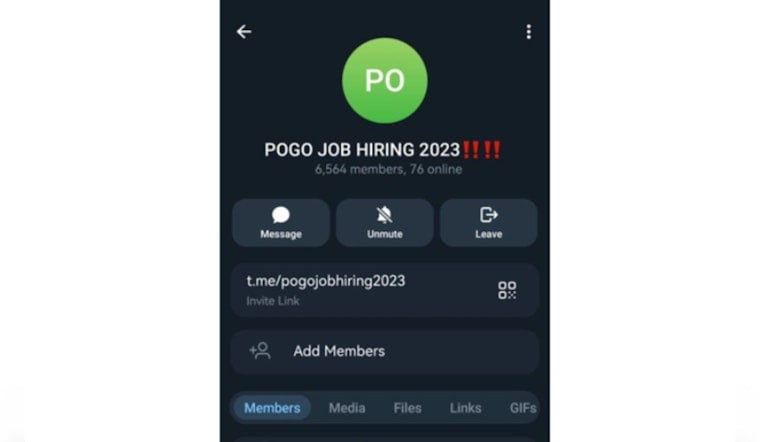
What looked like a ticket to a cushy overseas gig turned out, federal investigators say, to be a pipeline into captivity and high-pressure crime. The Justice Department says it has carried out a first-of-its-kind seizure of a Telegram channel that pitched well-paid jobs in Cambodia to English-speaking workers, then funneled them into compounds where they were forced to run scams on Americans.
According to investigators, recruits were promised strong salaries, only to have their passports and phones confiscated once they arrived. They were held in compounds, pressured to impersonate U.S. banks and law enforcement, and pushed to help drain victims’ accounts. Officials say the Telegram takedown is part of a larger international push to rip out the infrastructure behind so-called “pig-butchering” and other large-scale investment fraud schemes.
The Department of Justice says its Scam Center Strike Force not only seized the Telegram channel but also took down 503 fraudulent investment websites and helped restrain more than $701.96 million in cryptocurrency linked to laundering stolen funds, while unsealing criminal complaints against two Chinese nationals tied to the Shunda compound in Burma, as detailed by the Department of Justice. Officials say these seizures and charges were coordinated with foreign partners and multiple U.S. agencies as part of a broad effort to disrupt transnational scam centers rather than just pick off individual operators.
In its announcement, the DOJ said “the Strike Force conducted a first-of-its-kind seizure” of the messaging channel and that workers recruited through it “were held against their will and forced to defraud victims.” The channel’s job posts specifically targeted English speakers, sometimes asking for “American” accents, and then steered applicants toward compounds near the Thai border, according to the Department of Justice.
All of this is unfolding against what federal numbers show was a record year for online fraud in the United States. The FBI’s Internet Crime Complaint Center recorded 1,008,597 complaints in 2025 and reported $20.877 billion in losses, with investment and cryptocurrency fraud among the most expensive categories for victims. The 2025 IC3 report added AI-related fraud as a tracked descriptor and highlights how quickly relationship-style recruiting combined with fake trading platforms can snowball into multi-million-dollar schemes. IC3 2025 Annual Report.
Inside Operation Riptide and the Infrastructure Crackdown
The FBI says the Telegram seizure falls under Operation Riptide, its ongoing push to go after the tools, services, and money channels that make global cybercrime possible. That includes everything from phishing kits and malicious VPNs to recruiting pipelines and laundering networks.
A release from the bureau’s Boston field office highlighted a related international takedown of a VPN service used by ransomware actors to compromise businesses worldwide and described Operation Riptide as a sustained enforcement response to soaring online losses. FBI Boston.
Miami’s Front-Row Seat in the Investigation
The Telegram action itself is being run out of the FBI’s Miami Field Office as part of the Strike Force investigation, the bureau said in a social media post outlining the move. According to investigators, the seized channel served as a funnel that delivered recruits to Cambodian compounds where trafficked workers were forced to carry out law-enforcement-impersonation scams and investment fraud operations aimed squarely at U.S. victims. FBI Miami (X).
Legal and Diplomatic Fallout
Alongside the criminal actions, the financial and diplomatic pressure has started to ramp up. The Treasury Department’s Office of Foreign Assets Control has designated a Cambodian senator and 28 related affiliates tied to the scam network, cutting off U.S. access to their associated property and signaling that sanctions are on the table as a disruption tactic. The State Department has also announced reward offers aimed at key scam compounds, part of what officials describe as a whole-of-government strategy that pairs criminal complaints with asset restraints and diplomatic pressure. U.S. Treasury / OFAC.
How to Spot These Job-Recruitment Traps and Where to Report
Officials say certain patterns keep showing up in these schemes. Red flags include unsolicited offers for overseas jobs that promise unusually high pay for remote “investment” work or vague customer-service roles, requests for American accents or overnight U.S. hours, and recruiters who eagerly arrange travel but then move to confiscate passports or other documents. Another warning sign: intense pressure to start immediately on behalf of a trading platform or investment site you have never heard of.
If you or someone you know has responded to a suspicious overseas job pitch or believes they were pulled into one of these scams, federal authorities urge you to file a report with the FBI’s Internet Crime Complaint Center and contact your local FBI field office for help. The IC3 report, along with FBI guidance, offers information for victims and for organizations trying to spot these schemes before they spread further. IC3 2025 Annual Report.





