

























































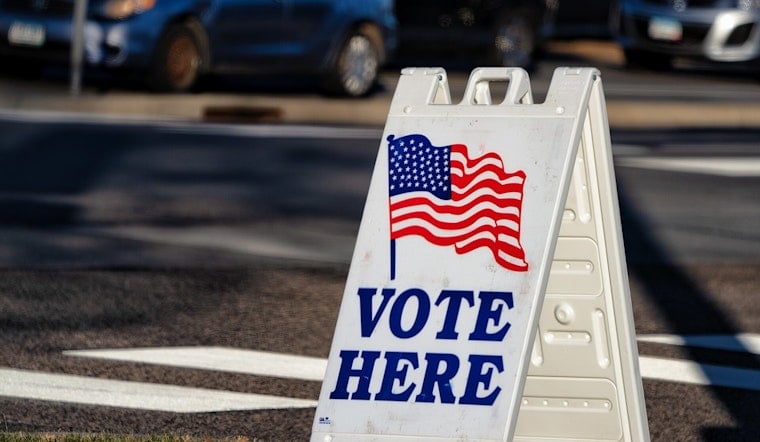
Republican secretary of state hopeful Cindy Werner is staring down an uncomfortable paperwork problem after a man still serving a felony sentence gathered more than 300 nomination signatures for her campaign. The signatures were turned in in late May, just days before the June 1 filing deadline. Wisconsin election law requires that anyone who certifies nomination papers be eligible to vote, and critics warn that using someone on community supervision could put entire pages of signatures on the chopping block. Werner says her team is now combing through the situation after speaking with the circulator, who told the campaign he misunderstood the rules about who has to be eligible.
According to The Badger Project, court records and Werner’s own nomination papers show the circulator, a Milwaukee resident released from prison in December 2025 and still on community supervision, collected more than 300 of the signatures Werner submitted. The outlet reports that his full sentence could run as late as 2031. Werner told the publication she “immediately began reviewing the matter,” adding that the circulator said he thought the eligibility instructions applied only to the people signing, not the person collecting the signatures.
State law is pretty explicit on this point. The circulator who certifies a nomination paper has to be a “qualified elector” of Wisconsin, meaning eligible to vote at the time they pass the sheet around, under Wis. Stat. § 8.15. The Wisconsin Elections Commission’s ballot-access guidance adds another layer of pressure: candidates for statewide constitutional offices need at least 2,000 valid nomination signatures. Tossing out hundreds of signatures because the circulator was ineligible could drop a campaign below that statutory floor. On top of that, the rules set tight windows for post-filing challenges and for election officials to review and strike signatures.
At a June 9 meeting, commissioners took a hard look at Werner’s paperwork, flagging several pages as “sketchy” and pointing out similarities they saw among certain signatures. After staff review and supplemental filings, however, the commission ultimately certified 2,219 of her signatures and kept her on the August primary ballot, as WisPolitics reported. Commission Chair Ann Jacobs reminded colleagues that they are “not handwriting experts” and said the panel has generally steered clear of tossing signatures based on gut instinct alone. That call keeps Werner on the ballot for now, but it does not block future administrative or court challenges from opponents or other eligible voters.
What happens next
Under the Wisconsin Elections Commission’s own ballot-access manual, anyone with standing can challenge nomination papers by filing a written objection with the appropriate filing officer in the short window right after the deadline. From there, the commission or filing officer can cross out entire pages or specific signature lines that do not meet the letter of the law. If signatures collected by an ineligible circulator end up voided and Werner drops below the 2,000-signature minimum, she could be kicked off the ballot, a move that would almost certainly invite appeals or more formal litigation. Campaigns sometimes try to rescue borderline signatures with corrective affidavits or additional paperwork during the review period, hoping to keep their totals safely above the cutoff.
Legal implications
The fine print for circulators is not just boilerplate. The certification section they sign warns that knowingly falsifying the affidavit is a crime under Wisconsin election law, and state courts have leaned on that warning in recent ballot-access fights. In Morgan Hess v. Wisconsin Elections Commission, for example, the Court of Appeals discussed how those nomination-paper rules work in practice. That language does not automatically turn every paperwork error into a criminal case, since prosecutors would still need evidence of both intent and falsity, but it gives ammunition to anyone formally alleging that a circulator misrepresented their eligibility. For now, Werner’s situation is parked at the administrative level with the WEC and will only head to a courtroom if challengers decide to push the issue to judicial review.





.jpg)