

























































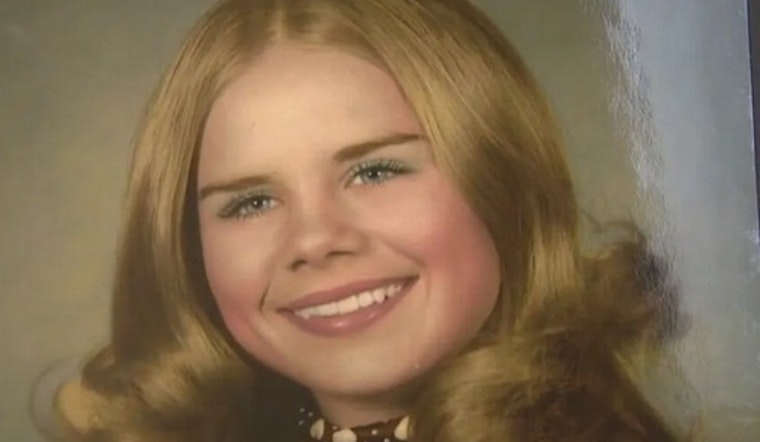
A Fort Worth cold case that haunted the city for decades is now driving a national push in Congress to bankroll cutting-edge DNA testing for unsolved crimes across the country.
The bipartisan proposal, known as the Carla Walker Act, would create new federal grants for advanced DNA work, including forensic genetic genealogy, so local agencies can reopen stalled investigations. Tarrant County prosecutors spotlighted the measure on the District Attorney’s Facebook page yesterday, deliberately tying the debate in Washington back to the North Texas case that inspired the bill’s name.
Senators John Cornyn (R-Texas) and Peter Welch (D-Vt.) are backing the measure, which supporters say would give smaller or underfunded jurisdictions access to tools they currently cannot afford, according to Sen. Cornyn's Office. The senators’ office says the bill cleared the Senate Judiciary Committee on May 14, 2026, as part of a broader package of bipartisan public safety legislation.
What the Bill Would Do
The text of H.R. 3591 carves out two separate grant tracks, according to Congress.gov. One would be a competitive grant program that pays for high-density whole-genome sequencing and analysis in cases where traditional CODIS searches have come up empty. The other would help publicly funded laboratories buy the equipment and supplies they need to run this kind of testing in-house.
The bill authorizes $5 million a year for advanced testing and another $5 million a year for equipment for fiscal years 2024 through 2028. It also requires grant recipients to follow the Department of Justice’s interim policy that governs how forensic genealogical searches are conducted.
Named for a Fort Worth Cold Case
The measure takes its name from the 1974 abduction and murder of 17-year-old Carla Walker in Fort Worth, a case that remained unsolved for decades until genealogical DNA analysis finally generated a solid lead. Local reporting details how that work ultimately pointed investigators toward Glen McCurley, who changed his plea in 2021. Prosecutors and Walker’s family have repeatedly held up that breakthrough as proof of what these techniques can do, according to the Fort Worth Star-Telegram.
Local Reaction and Privacy Questions
The Tarrant County District Attorney’s Office promoted the Carla Walker Act on its Facebook page yesterday, arguing that the kind of testing used in Walker’s case could unlock answers in countless other unsolved crimes. Forensic science groups, including the American Academy of Forensic Sciences’ Consortium of Forensic Science Organizations, have urged lawmakers to get behind the bill, as described by the AAFS/CFSO.
Privacy and civil liberties advocates, meanwhile, are far less enthusiastic. They warn that expanded use of consumer genealogy databases for criminal investigations raises serious questions about consent, scope, and potential surveillance creep, concerns the Electronic Frontier Foundation has spelled out in its analysis of forensic genetic genealogy searches.
Next Steps and Guardrails
If Congress passes the Carla Walker Act, the program would not be a blank check. Grant recipients would have to keep detailed records, submit reports after the money is spent, and accept federal audits. The bill also instructs the Attorney General to send Congress a report on best practices and any additional regulations that might be needed, according to Congress.gov.
Lawmakers still have to win funding in the appropriations process and steer the measure through both chambers before any of that becomes reality. For Fort Worth, the proposal is a reminder that one local cold case helped change how investigators across the country search for answers. What Congress decides to do with the Carla Walker Act will shape how many communities can tap high-density DNA tools in their own investigations, and how tightly those tools are wrapped in privacy safeguards.





