

























































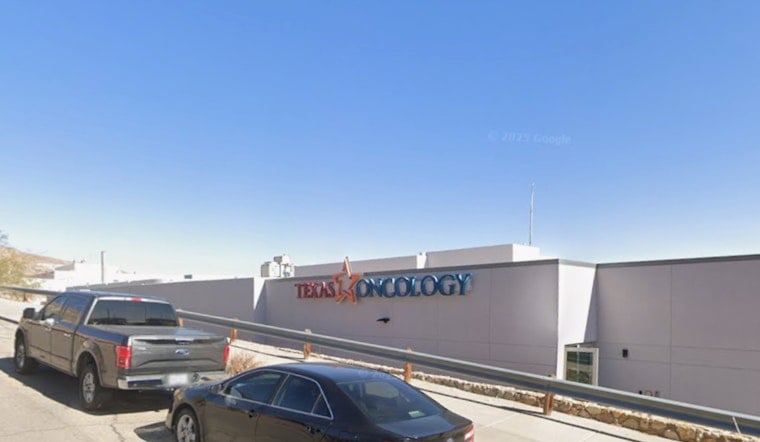
Texas Oncology has cut the ribbon on a revamped Grandview cancer center in El Paso after roughly a $35 million investment, promising shorter visits and more services on site for patients across the Borderplex. The overhaul brings expanded treatment space, an on-site pharmacy and upgraded radiation equipment that is intended to speed up appointments and open the door to more clinical trials.
The company hosted a June 4 grand opening at the Grandview location at 1901 Grandview Ave, where physicians, patients and community partners were invited to tour the updated space, according to Texas Oncology. The event details note that the center offers medical oncology, radiation oncology and pharmacy services, and that the project is part of a broader, citywide modernization push.
Local reporting frames the Grandview renovation as a key piece of Texas Oncology’s $35 million effort to modernize its El Paso footprint, with the center covering about 40,000 square feet and adding new treatment rooms and an on-site pharmacy, as reported by El Paso Inc.. Medical leaders told the outlet the upgrades are meant to cut down on travel time for patients who need frequent appointments, which is pretty crucial when your calendar is already packed with scans and infusions.
Grandview is not the only site getting attention. Texas Oncology’s El Paso expansion has also included the Vista Del Sol radiation location, which reopened last November, and company materials explain that the same $35 million program is funding new technology and capacity at multiple clinics across the city, according to Texas Oncology. The practice’s public information lists roughly 530 physicians and about 280 locations statewide and notes that it treats tens of thousands of new cancer patients every year. Officials say the upgrades are intended to keep more of that care and more clinical trials in El Paso, rather than sending them out of town.
At the unveiling, local officials and company representatives said the Grandview center will receive upgraded radiation equipment and that Texas Oncology plans to add three new linear accelerators in El Paso to increase LINAC capacity. The new machines are expected to arrive early next year and are anticipated to shorten patient visits, according to local reporting. Clinic leaders described those additions as a near-term way to reduce the travel and time burden for patients while larger regional projects are still being built out, El Paso Inc. reported.
How Grandview Fits Into A Bigger Borderplex Cancer Plan
The Grandview upgrades are landing just as the region gears up for a much larger academic project, the Fox Cancer Center, being built by Texas Tech Health El Paso in partnership with University Medical Center. That center is estimated to cost about $340 to $342 million and is slated to open in 2028, as reported by Tradeline. Plans call for imaging, radiation, infusion, and research to be consolidated under one roof, and local leaders say that community hubs like Grandview are meant to expand access right now while the bigger academic facility is on the way. Ground was broken in 2025, and planners say the Fox Cancer Center will bring additional LINAC and imaging capacity to the Borderplex.
Research And Patient Access
Community sites such as Grandview are also plugged into clinical research, which can give patients earlier access to investigational therapies. The broader US Oncology research network that supports community-based trials typically manages more than 200 active clinical studies, according to a company release from US Oncology Research. Local medical leaders say running trials in El Paso means fewer patients have to leave the region to participate and that these studies can open the door to cutting-edge therapies, per reporting from Texas Tech Health El Paso and national research materials.
For patients and families, company and hospital leaders say the renovated Grandview center should make the grind of day-to-day treatment a bit easier while the Fox Cancer Center and other long-term projects move forward. Hospital and industry officials cast the spending as a way to keep more care close to home and to ease some of the logistical and financial strain that comes with frequent radiation and infusion visits, according to Tradeline.


